 JP
JP★★★★★
"I check the word list at the end. It saves time."
Elementary स्तर पर जापानी ग्रेडेड रीडर्स पढ़ें — प्रत्येक पुस्तक में पाठ के बगल में एक शब्दकोश और शब्दावली अभ्यास के साथ। ईबुक और पेपरबैक के रूप में उपलब्ध।
हर पुस्तक एक ई-बुक (EPUB और PDF) और एक पेपरबैक के रूप में उपलब्ध है।
ये जापानी A2 ग्रेडेड रीडर्स can understand frequently used expressions and communicate in simple, routine tasks वाले Elementary सीखने वालों के लिए डिज़ाइन किए गए हैं। कहानियों में A2 CEFR स्तर के लिए सावधानीपूर्वक कैलिब्रेटेड शब्दावली का उपयोग किया गया है ताकि आप स्वाभाविक रूप से अपनी जापानी का विस्तार करते हुए पढ़ने का आनंद ले सकें। हर पृष्ठ पर पाठ के बगल में एक शब्दावली आपको तुरंत अनुवाद देती है — अलग शब्दकोश के लिए हाथ बढ़ाने की कोई आवश्यकता नहीं है। प्रत्येक अध्याय में ऐसे अभ्यास शामिल हैं जो समझ का परीक्षण करते हैं और नई शब्दावली को सुदृढ़ करते हैं, और QR कोड आपको फ्लैशकार्ड और मिलान वाले खेलों के साथ इंटरैक्टिव ऑनलाइन अभ्यास से जोड़ते हैं। ईबुक और पेपरबैक के रूप में उपलब्ध।
Japanese is the national language of Japan. Communities of speakers exist worldwide, especially in Brazil and the United States.
Japanese has about 125 million speakers, almost all of them in Japan, with diaspora communities especially in Brazil and the United States.
Japanese is agglutinative: verbs and adjectives conjugate with suffixes for tense, politeness, and negation. The basic predicate is often SOV or topic–comment. Politeness levels (keigo) are socially important. Writing uses a mix of kanji (logographs) with hiragana and katakana syllabaries.
हमारी साइट पर औसत ग्राहक रेटिंग और समीक्षाओं की संख्या के आधार पर रैंक किया गया। नीचे दिया गया हर शीर्षक एक Pentecost ग्रेडेड रीडर है: CEFR स्तर पर एक सरलीकृत कहानी जिसमें सीखने के लिए सहायता शामिल है।
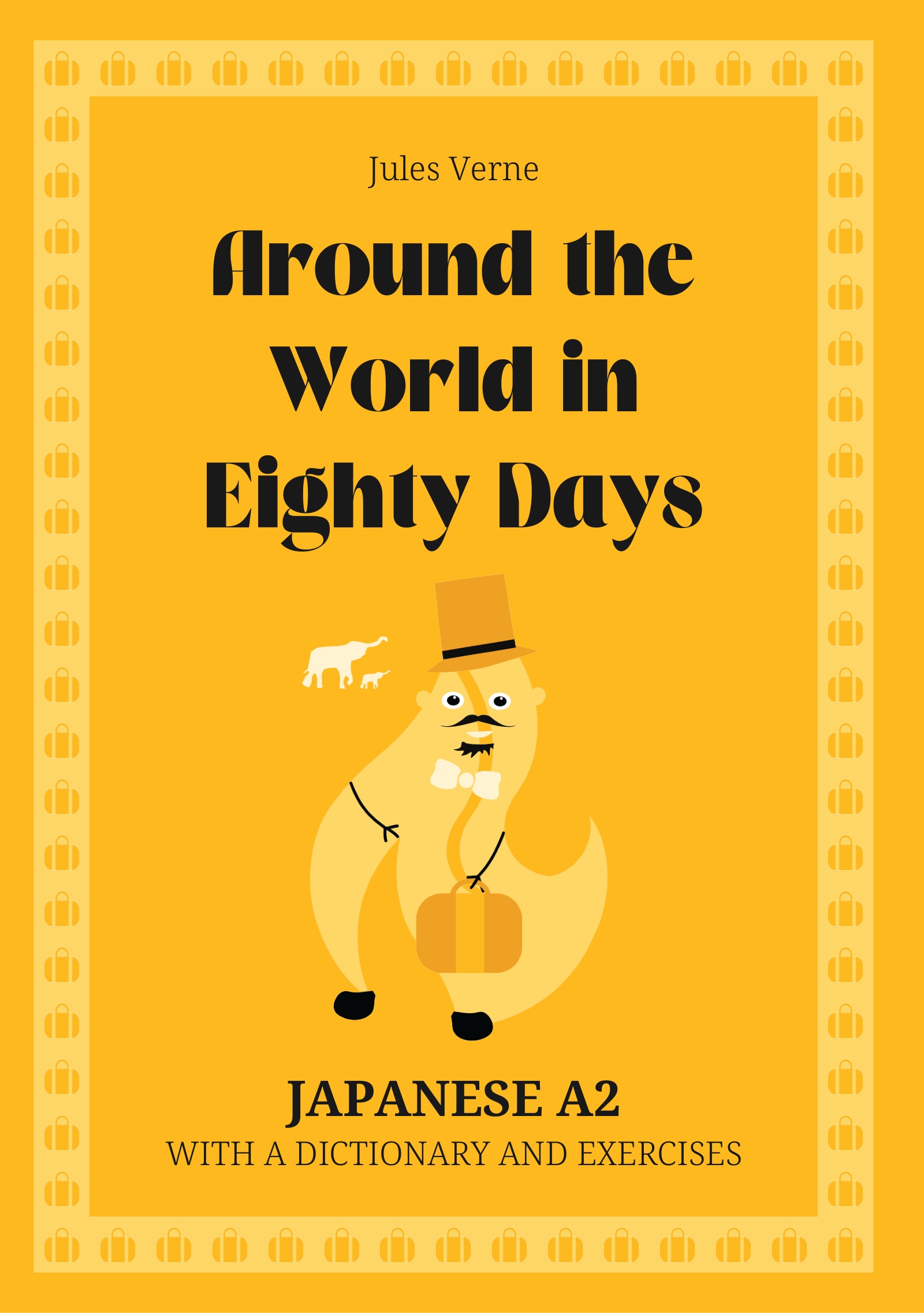
A fortune wagered, a world to conquer in eighty days, and a relentless detective on your trail. Can you make it? You'll effortlessly absorb essential A2 Japanese vocabulary and grammar, building fluency through an unforgettable adventure. Margin notes ensure you never break your reading flow.
साथ में शब्दावली · पुस्तक में और ऑनलाइन अभ्यास
हमारे जापानी A2 ग्रेडेड रीडर्स को लगातार उत्कृष्ट समीक्षाएं मिलती हैं — 10 people have rated उन्हें औसतन 5 में से 5.00 देते हैं। पाठक पाठ के बगल में डिक्शनरी, अध्याय के अंत के अभ्यास और ऑनलाइन शब्दावली खेलों को उन विशेषताओं के रूप में उजागर करते हैं जो हमारी किताबों को किसी भी अन्य ग्रेडेड रीडर श्रृंखला से अलग करती हैं।
Our collection features 八十日間世界一周 — the perfect starting point for learning through reading.
"I check the word list at the end. It saves time."
"The glossary still helps. I use it often."
"The Japanese dialogues are still clear."
"I need the glossary less for Japanese."
"I understand more Japanese each week."
"I read on the train. One unit fits."
क्या आप निश्चित नहीं हैं कि A2 आपके लिए सही स्तर है? हर किताब में एक निःशुल्क नमूना शामिल है जिसे आप खरीदने से पहले कठिनाई की जांच के लिए डाउनलोड कर सकते हैं। आप कुछ ही मिनटों में अपना CEFR स्तर जानने के लिए हमारा निःशुल्क रीडिंग प्लेसमेंट टेस्ट भी दे सकते हैं।
शोध पुष्टि करता है कि व्यापक पठन शब्दावली बनाने, पढ़ने की प्रवाह में सुधार करने और समग्र भाषा दक्षता विकसित करने के सबसे प्रभावी तरीकों में से एक है। ग्रेडेड रीडर्स पाठ की कठिनाई को आपके CEFR स्तर से मिलाकर इस दृष्टिकोण को सुलभ बनाते हैं, ताकि आप इष्टतम सीखने के क्षेत्र में रहें। हमारे दृष्टिकोण के पीछे के विज्ञान के बारे में Pentecost मेथड पेज पर और जानें।