German

Book Title

by , simplified by Angela Borderkeeper

★★★★☆
4.4 (7 reviews)
A1 for English-speaking learners
Side glossary
In-book and online exercises
Flashcards for each chapter
ई-बुक
$2.99 EPUB / PDF एक मिनट में आपके ईमेल पर — और ऐप में भी
🛡️ Pentecost वादा: हम गारंटी देते हैं कि आपको अपनी ई-बुक पसंद आएगी। 30-दिन की पूरी वापसी — कोई सवाल नहीं पूछा जाएगा।
सॉफ्टकवर
$17.99 मांग पर मुद्रित — चेकआउट पर सटीक डिलीवरी का समय

Imagine reading “Around the World in 80 Days” in German – and understanding every page

“Around the World in 80 Days” (in German: “Reise um die Erde in 80 Tagen”, orig. Around the World in Eighty Day) by Jules Verne – is a complete, engaging graded reader specially adapted for A1 (beginner) level. You don't need to know every word. You'll understand 95% of the text immediately, and every new word is explained in the margin. You simply read – and learn naturally.

What is this book about?

  • Phileas Fogg makes an audacious wager to circumnavigate the world in eighty days.
  • He embarks on a thrilling global dash with his new valet, Passepartout, pursued by Detective Fix.
  • Their journey is fraught with peril, delays, and leads to the rescue of an Indian princess, Aouda.

Why does this work better than apps and textbooks?

Our books are based on the Pentecost Method – the only approach 100% based on scientific research into language learning. The result? You learn faster, remember more, and actually enjoy learning.

  • Read without interruption: Translations of the most difficult words are found in the margin of each page – you don't have to break away from the story to look them up in a dictionary.
  • Consolidate what you've read: After each chapter, there are exercises (crosswords, gap-fills, anagrams) tailored to A1 level – new words stick in your mind.
  • Learn anywhere: A mobile app with games allows you to review vocabulary on your way to work, in a queue, or whenever you have a moment.
  • Build lasting vocabulary: Flashcards at the end of the book allow you to systematically review the most important words – so you don't forget what you've learned.

Matched to your exact level

The vocabulary in this book has been selected based on an analysis of 2 billion words from authentic texts, precisely matched to A1 level. You learn exactly the words that are most useful in everyday life.

How to choose the right level?

This book is at A1 level. Not sure which level to choose? Take our 3-minute placement test on our website – we'll immediately show you which book is right for you.

About the author

Jules Verne

Author

Jules Verne

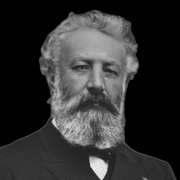
Jules Verne (1828–1905) was a French writer known as the father of science fiction and one of the most translated authors in the world. In his novels he foresaw submarines and space travel long before they existed.


Angela Borderkeeper

Translator and editor

Angela Borderkeeper adapts German-language stories for English readers who are building vocabulary through extensive reading. She balances literal clarity with readable English, especially where German stacks nouns or uses modal particles that do not map neatly. Her side notes focus on collocations learners will meet again in real newspapers and podcasts.

Customer Reviews

4.4
★★★★☆
(7 reviews)
ExpatKate88 2025-12-10
★★★★★

Quietly brilliant!

ArchivistDrew 2026-01-08
★★★★★

Klar

SattelzugStudy 2026-05-24
★★☆☆☆

finally, German bkoks I van actually finish while the kids sleep!

DuploDigger 2026-06-17
★★★★★

Behind the site cabin, with grit still under my thumbnail and eleven minutes of break left, I was trying to tell my son on the phone that I had finishrd the whkle chapter, and I kept reaching for the wrong verb at the end. This readsr is the first German book that let me pick it up in those scraps of time withouy losing the thread, because the sentences are short, the cast is small, and the same people come back page after page. Read a page aloud before you touch the glossary, and notice how many words, like "Information" or "Hotel", your English eyes alreadu recognise, so your effort goes where the story actually moves. Keep a pencil and a scrap of cardboard in your pocket, write down fhe three words you cannot guess, and leave the rest alone. Stop translating every sentence back into English in your head, because the verb-second order that felt strange to me at first became ordinary once I stopped fighting it and let the book repeat it until it sounded right.

AnalogAdmirer 2026-06-29
★★★★☆

Erste Töne, because this A1 reader gives you eimple, everydau dialogue to lisyen foe un slow German poddasts, instead of burying you in the grammar drills so many coueses favor. As a guifar player learning for fun in my late thirties, I love how it nudves me to listen for sounds like the “ch” in “ich,” which English dkesn’t quite have.

Pages220
Chapters37
For learnersfor English-speaking learners
ISBN (E-Book)9788384560921
ISBN (Paperback)9788384560938
Published2026-04-21

Other top-rated German A1 graded readers

Ranked by average customer rating and number of reviews on our site. Every title below is a Pentecost graded reader: a simplified story at CEFR level with learning supports built in.

  1. Imagine tumbling down a rabbit hole into a world where logic bends and queens scream "Off with their heads!" Master beginner German naturally as you follow Alice's wild journey, absorbing hundreds of real-world words without a textbook. A margin dictionary means you never break your reading flow.

    Side glossary · In-book and online exercises

  2. The gaslight flickers, a shadow falls across Baker Street, and a baffling mystery awaits. Master essential German vocabulary and grammar naturally, without even realizing you're learning. A margin dictionary means you never break your reading flow.

    Side glossary · In-book and online exercises

About German (the language of this book)

Where German is spoken

German is an official language in Germany, Austria, Switzerland, Liechtenstein, Luxembourg, and Belgium (in part), and is spoken by communities across Europe and worldwide.

How many people speak it

German has roughly 80–100 million native speakers and well over 100 million people who use it regularly as a second or foreign language, chiefly in Europe.

Grammar and structure

German is known for its three genders (masculine, feminine, neuter), four cases (nominative, accusative, dative, genitive), and verb-second (V2) word order in main clauses. Compound nouns are frequent; separable verbs and modal verbs are core topics for learners at intermediate levels.