Polish

Book Title

by , simplified by Marie Bender

☆☆☆☆☆
0.0 (0 reviews)
A1 for English-speaking learners
Side glossary
In-book and online exercises
Flashcards for each chapter
E-Book
$2.99 Buy E-Book EPUB / PDF in a minute to your email
🛡️ The Pentecost Promise: We guarantee you'll love your e-book. 30-day full refund — no questions asked.
Softcover
$15.99 Buy Paperback Printed on demand — exact delivery time at checkout

Imagine reading „Le Petit Prince” in Polish – and understanding every page

„Le Petit Prince” (in Polish: „Mały Książę”, orig. Le Petit Prince) by Antoine de Saint-Exupéry – is a complete, engaging graded reader specially adapted for A1 (beginner) level. You don't need to know every word. You'll understand 95% of the text immediately, and every new word is explained in the margin. You simply read – and learn naturally.

What is this book about?

  • An aviator, stranded in the Sahara, meets a mysterious young prince from a distant asteroid.
  • The Prince shares tales of his life on B612, his demanding rose, and his journey across planets filled with peculiar adults.
  • On Earth, a wise fox teaches him about unique connections, helping him understand his rose and decide to return home.

Why does this work better than apps and textbooks?

Our books are based on the Pentecost Method – the only approach 100% based on scientific research into language learning. The result? You learn faster, remember more, and actually enjoy learning.

  • Read without interruption: Translations of the most difficult words are found in the margin of each page – you don't have to break away from the story to look them up in a dictionary.
  • Consolidate what you've read: After each chapter, there are exercises (crosswords, gap-fills, anagrams) adapted to A1 level – new words stick in your mind.
  • Learn anywhere: A mobile app with games allows you to review vocabulary on your way to work, in a queue, or whenever you have a moment.
  • Build lasting vocabulary: Flashcards at the end of the book allow you to systematically review the most important words – so you don't forget what you've learned.

Tailored to your exact level

The vocabulary in this book has been selected based on an analysis of 2 billion words from authentic texts, precisely matched to A1 level. You learn exactly the words that are most useful in everyday life.

How to choose the right level?

This book is at A1 level. Not sure which level to choose? Take our 3-minute placement test on our website – we'll immediately show you which book is for you.

About the author

Antoine de Saint-Exupéry

Author

Antoine de Saint-Exupéry

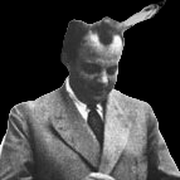
Antoine de Saint-Exupéry (1900–1944) was a French writer and aviator who drew on his own flying adventures. In 1944 his plane vanished over the Mediterranean during a reconnaissance flight, and the wreckage was only found more than half a century later.


Marie Bender

Translator and editor

Marie Bender adapts Polish literary texts for English speakers learning Polish through parallel reading and footnoted editions. She explains case endings and aspect pairs in short, plain English, then lets the Polish carry the voice of the narrator. She reads each chapter twice: once for accuracy, once for pace.

Customer Reviews

0.0
☆☆☆☆☆
(0 reviews)
Pages152
Chapters27
For learnersfor English-speaking learners
ISBN (E-Book)9788384569900
ISBN (Paperback)9788384569917
Published2026-09-25

About Polish (the language of this book)

Where Polish is spoken

Polish is the official language of Poland and a recognized minority language in several neighbouring states. Large Polish-speaking communities exist in the United Kingdom, Germany, the United States, and Canada.

How many people speak it

Polish has about 40 million native speakers, mainly in Poland, plus several million more in diaspora communities across Europe and North America.

Grammar and structure

Polish is a West Slavic language with free word order but a default SVO pattern. It has three grammatical genders (masculine, feminine, neuter), seven cases for nouns and adjectives, and aspectual pairs of verbs (perfective vs. imperfective). Consonant clusters and nasal vowels are distinctive; palatalization plays an important role in inflection.