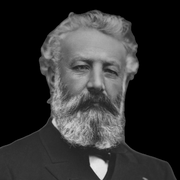
Imagine reading “Around the World in Eighty Days” in Danish – and understanding every page
“Around the World in Eighty Days” (in Danish: “Jorden rundt i 80 dage”, orig. Around the World in Eighty Day) by Jules Verne – is a complete, engaging story specially adapted for the B2 (upper intermediate) level. You don't need to know every word. You'll understand 95% of the text immediately, and every new word is explained in the margin. You simply read – and learn naturally.
What is this book about?
- Phileas Fogg, a precise English gentleman, wagers his fortune that he can circumnavigate the world in eighty days.
- Accompanied by his valet Passepartout, Fogg faces constant peril, unexpected delays, and the relentless pursuit of Detective Fix.
- Amidst their frantic quest, they rescue the Indian princess Aouda, adding a poignant human element to their journey.
Why does this work better than apps and textbooks?
Our books are based on the Pentecost Method – the only approach 100% based on scientific research into language learning. The result? You learn faster, remember more, and actually enjoy learning.
- Read without interruption: Translations of the most difficult words are found in the margin of each page – you don't have to break away from the story to look them up in a dictionary.
- Consolidate what you've read: After each chapter, there are exercises (crosswords, gap-fills, anagrams) adapted to the B2 level – new words stick in your mind.
- Learn anywhere: A mobile app with games allows you to review vocabulary on your way to work, in a queue, or whenever you have a moment.
- Build lasting vocabulary: Flashcards at the end of the book allow you to systematically review the most important words – so you don't forget what you've learned.
Tailored to your exact level
The vocabulary in this book has been selected based on an analysis of 2 billion words from authentic texts, precisely matched to the B2 level. You learn exactly the words that are most useful in everyday life.
How to choose the right level?
This book is a graded reader for the B2 level. Not sure which level to choose? Take our 3-minute placement test on our website – we'll immediately show you which book is right for you.