Hebrew

Book Title

by

★★★★★
5.0 (9 reviews)
A1 for English-speaking learners
Side glossary
In-book and online exercises
Flashcards for each chapter
E-Book
$2.99 EPUB / PDF in un minuto alla tua email — e nell'app
🛡️ La Promessa Pentecost: Ti garantiamo che amerai il tuo e-book. Rimborso completo entro 30 giorni, senza fare domande.
Brossura
$15.99 Stampato su richiesta — tempo di consegna esatto al checkout

Imagine reading “Le Petit Prince” in Hebrew – and understanding every page

“Le Petit Prince” (in Hebrew: “הנסיך הקטן”, orig. Le Petit Prince) by Antoine de Saint-Exupéry – is a complete, engaging story adapted specifically for A1 (beginner) level. You don't need to know every word. You understand 95% of the text immediately, and every new word is explained in the margin. You simply read – and learn naturally.

What is this book about?

  • An aviator, stranded in the Sahara Desert, encounters a mysterious young prince from a distant asteroid.
  • The Little Prince recounts his journey across various planets and learns the profound meaning of "taming" from a wise fox on Earth.
  • He realizes the true significance of his unique rose and makes a heartbreaking decision to return to her.

Why does it work better than apps and textbooks?

Our books are based on the Pentecost Method – the only approach 100% grounded in scientific research on language learning. The result? You learn faster, remember more, and actually enjoy the learning process.

  • Read without interruption: Translations of the most difficult words are found in the margin of each page – you don't have to break away from the story to look them up in a dictionary.
  • Reinforce what you've read: After each chapter, there are exercises (crosswords, gap-fills, anagrams) tailored to the A1 level – new words stick in your mind.
  • Learn anywhere: A mobile app with games allows you to review vocabulary on your way to work, in line, or whenever you have a moment.
  • Build lasting vocabulary: Flashcards at the end of the book allow you to systematically review the most important words – so you don't forget what you've learned.

Matched to your exact level

The vocabulary in this book has been selected based on an analysis of 2 billion words from authentic texts, precisely matched to the A1 level. You learn exactly the words that are most useful in everyday life.

How to choose the right level?

This book is an graded reader at A1 level. Not sure which level to choose? Take our 3-minute placement test on our website – we'll immediately show you which book is right for you.

About the author

Antoine de Saint-Exupéry

Author

Antoine de Saint-Exupéry

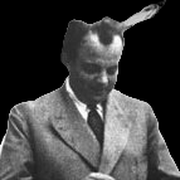
Antoine de Saint-Exupéry (1900–1944) was a French writer and aviator who drew on his own flying adventures. In 1944 his plane vanished over the Mediterranean during a reconnaissance flight, and the wreckage was only found more than half a century later.


Theresa White

Translator and editor

Theresa White edits English support text for Hebrew originals in the extensive-reading list. She distinguishes modern Israeli usage from biblical echoes when it matters for comprehension, and keeps glosses short enough not to bury the plot. She coordinates Hebrew spelling and vocalisation choices across a whole book so they stay consistent.

Customer Reviews

5.0
★★★★★
(9 reviews)
MatzahBaller 2025-12-29
★★★★★

saba is happy!

MaccabeeMoment 2026-01-21
★★★★★

Readable

TorahLearner77 2026-02-03
★★★★★

reading the script right to left finally fwels so victorious

EngiGran 2026-03-10
★★★★★

Hebrew skips 'to bw' and I love that!

KibbutzKid_ 2026-06-07
★★★★★

Nikud magic!

Pages152
Chapters27
For learnersfor English-speaking learners
ISBN (E-Book)9788384569115
ISBN (Paperback)9788384569122
Published2026-10-01

About Hebrew (the language of this book)

Where Hebrew is spoken

Modern Hebrew is a co-official language of Israel and is used in government, education, media, and daily life by millions of first- and second-language speakers.

How many people speak it

Modern Hebrew has about 9 million speakers, the majority in Israel, including both native speakers and proficient second-language users.

Grammar and structure

Modern Hebrew is largely SVO with root-and-pattern morphology: verbs and many nouns are built from consonantal roots with vowel patterns. Gender and number agreement are systematic; the definite article is a prefix (ha-). Biblical and modern registers differ in vocabulary and some structures.