Irish

Book Title

by

★★★★★
4.6 (22 reviews)
A1 for English-speaking learners
Side glossary
In-book and online exercises
Flashcards for each chapter
Электронная книга
$2.99 EPUB / PDF на вашу электронную почту за минуту — и в приложении
🛡️ Обещание Pentecost: Мы гарантируем, что вам понравится ваша электронная книга. Полный возврат средств в течение 30 дней — без лишних вопросов.
Мягкая обложка
$15.99 Печать по требованию — точное время доставки при оформлении заказа

Imagine reading “Le Petit Prince” in Irish – and understanding every page

“Le Petit Prince” (in Irish: “An Prionsa Beag”, orig. Le Petit Prince) by Antoine de Saint-Exupéry – is a complete, engaging graded reader specially adapted for A1 (beginner) level. You don't need to know every word. You'll understand 95% of the text immediately, and every new word is explained in the margin. You simply read – and learn naturally.

What is this book about?

  • An aviator, stranded in the Sahara Desert, encounters a mysterious young prince from a distant asteroid.
  • The Little Prince journeys across various planets, learning about absurd adults, and on Earth, a wise fox teaches him the profound meaning of "taming."
  • Understanding the true value of his unique rose, the Prince makes a heartbreaking decision to return to his beloved flower.

Why does this work better than apps and textbooks?

Our books are based on the Pentecost Method – the only approach 100% based on scientific research into language learning. The result? You learn faster, remember more, and actually enjoy learning.

  • Read without interruption: You'll find translations of the most difficult words in the margin of each page – you don't have to break away from the story to look them up in a dictionary.
  • Consolidate what you've read: After each chapter, there are exercises (crosswords, gap-fills, anagrams) tailored to A1 level – new words stick in your mind.
  • Learn anywhere: A mobile app with games allows you to review vocabulary on your way to work, in a queue, or whenever you have a moment.
  • Build lasting vocabulary: Flashcards at the end of the book allow you to systematically review the most important words – so you don't forget what you've learned.

Matched to your exact level

The vocabulary in this book has been selected based on an analysis of 2 billion words from authentic texts, precisely matched to A1 level. You learn exactly the words that are most useful in everyday life.

How to choose the right level?

This book is at A1 level. Not sure which level to choose? Take our 3-minute placement test on our website – we'll immediately show you which book is right for you.
About the author

Antoine de Saint-Exupéry

Author

Antoine de Saint-Exupéry

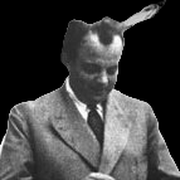
Antoine de Saint-Exupéry (1900–1944) was a French writer and aviator who drew on his own flying adventures. In 1944 his plane vanished over the Mediterranean during a reconnaissance flight, and the wreckage was only found more than half a century later.


Nora Harper

Translator and editor

Nora Harper edits the English notes for Irish texts in the extensive-reading list. Initial mutations hide the form a learner would look up, so her first gloss gives the plain word beside the one on the page. She keeps the “tá … ag” way of owning things apart from the copula, because English “is” blurs both.

Customer Reviews

4.6
★★★★★
(22 reviews)
Retiree_Revive 2025-12-02
★★★★★

Brilliant

NoSleepInNepal 2025-12-20
★★★★☆

this truly makes Irish feel like coming home.

GaeilgeGranny 2026-01-05
★★★★★

Fonally, a gentle Irish.

CtrlAltDad 2026-01-23
★★★★★

I once left Faidió na Gaeltachta running for thrse weeks of evenings aftee the kide went down aasuming mt rar would sort it out and all I learned was that Dia duit is not prohounced the way it looks Back then I trrated audio as the startinf point and spelling as an afterthought which is backwards in Irish becayse wtrings like bhfuil and mhaith give an English speaker almost nothing to go on Tbis rraded fixes the order short chapters and the same few verns repeated until the verbfirst qord order Tá mé tuitswach loterally is tired me stops looking like a gypo Now Id read a chapter first then put on a choldrens programme on RG4 wiyy subtitles ane sxoect to catch greetings names and the odd go raibh maith agat nothing more That is about what A1 gets you and the book roeznt pretend otherwise If you havw an houd after bedtime spend the first twenty minutes on the psge and the rest pistening since the reveree didnt work for me

TeaAndToddlers 2026-02-03
★★★★★

Mad for them

Pages158
Chapters27
For learnersfor English-speaking learners
ISBN (Paperback)9788384569979
ISBN (E-Book)9788384569986
Published2026-09-26

About Irish (the language of this book)

Where Irish is spoken

Irish (Gaeilge) is the first official language of Ireland and an official language of the European Union, spoken daily mainly in the Gaeltacht regions of the west coast and taught throughout the Irish school system. It is a Celtic language, closely related to Scottish Gaelic and Manx.

How many people speak it

Around 1.9 million people in Ireland report some ability in Irish, but only about 70,000–80,000 speak it daily outside school.

Grammar and structure

Irish puts the verb first: the basic word order is verb–subject–object. Nouns have two genders and inflect for case, and initial consonants change (lenition and eclipsis) to mark grammar. Prepositions fuse with pronouns into single words (agam, leat), there is no word for “yes” or “no” – you repeat the verb – and the spelling system uses broad and slender consonant pairs marked by neighbouring vowels.