Lithuanian

Book Title

by

★★★★★
4.7 (31 reviews)
A1 for English-speaking learners
Side glossary
In-book and online exercises
Flashcards for each chapter
Электронная книга
$2.99 EPUB / PDF на вашу электронную почту за минуту — и в приложении
🛡️ Обещание Pentecost: Мы гарантируем, что вам понравится ваша электронная книга. Полный возврат средств в течение 30 дней — без лишних вопросов.
Мягкая обложка
$15.99 Печать по требованию — точное время доставки при оформлении заказа

Imagine reading “Le Petit Prince” in Lithuanian – and understanding every page

“Le Petit Prince” (in Lithuanian: “Mažasis princas”, orig. Le Petit Prince) by Antoine de Saint-Exupéry – is a complete, engaging story adapted specifically for the A1 (beginner) level. You don't need to know every word. You'll understand 95% of the text immediately, and every new word is explained in the margin. You simply read – and learn naturally.

What is this book about?

  • An aviator, stranded in the Sahara Desert, encounters a mysterious young prince from a distant asteroid.
  • The Little Prince recounts his journey across various planets and learns the profound meaning of "taming" from a wise fox on Earth.
  • Understanding the true significance of his unique rose, the Prince makes a heartbreaking decision to return to his beloved flower.

Why does this work better than apps and textbooks?

Our books are based on the Pentecost Method – the only approach 100% based on scientific research in language learning. The result? You learn faster, remember more, and actually enjoy learning.

  • Read without interruption: Translations of the most difficult words are in the margin of each page – you don't have to break away from the story to look them up in a dictionary.
  • Consolidate what you've read: After each chapter, there are exercises (crosswords, gap-fills, anagrams) adapted to level A1 – new words stick in your mind.
  • Learn anywhere: A mobile app with games allows you to review vocabulary on your way to work, in a queue, or whenever you have a moment.
  • Build lasting vocabulary: Flashcards at the end of the book allow you to systematically review the most important words – so you don't forget what you've learned.

Tailored to your exact level

The vocabulary in this book has been selected based on an analysis of 2 billion words from authentic texts, precisely matched to level A1. You learn exactly the words that are most useful in everyday life.

How to choose the right level?

This book is at level A1. Not sure which level to choose? Take our 3-minute placement test on our website – we'll immediately show you which book is right for you.
About the author

Antoine de Saint-Exupéry

Author

Antoine de Saint-Exupéry

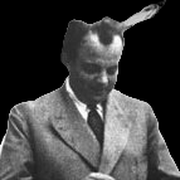
Antoine de Saint-Exupéry (1900–1944) was a French writer and aviator who drew on his own flying adventures. In 1944 his plane vanished over the Mediterranean during a reconnaissance flight, and the wreckage was only found more than half a century later.


Ruta Amber

Translator and editor

Ruta Amber prepares the English commentary for Lithuanian texts in the graded-reader programme. Lithuanian leans on participles where English would open a new clause, so she unpacks the first few and then trusts repetition. She notes the diminutives that carry affection rather than size, which a literal gloss loses.

Customer Reviews

4.7
★★★★★
(31 reviews)
BettyBoop72 2025-12-01
★★★★★

I van actually pronlunce Lithuanian now

JustDaveLIT 2025-12-10
★★★★★

Smashing!

KestutisFan 2025-12-20
★★★★★

We are both completelh hooked on reading basic Lithuanian together!

LithuanianSpoon 2026-01-04
★★★★★

Aha!

MyGrandpaSaid 2026-01-19
★★★☆☆

charming little books!

Pages156
Chapters27
For learnersfor English-speaking learners
ISBN (E-Book)9788384569054
ISBN (Paperback)9788384569061
Published2026-09-26

About Lithuanian (the language of this book)

Where Lithuanian is spoken

Lithuanian is the official language of Lithuania and one of the official languages of the European Union, with diaspora communities in the United States, the United Kingdom, Ireland, Norway and Poland. Together with Latvian it forms the Baltic branch of the Indo-European family and is often described as the most conservative living Indo-European language.

How many people speak it

Lithuanian has about 3 million native speakers, most of them in Lithuania.

Grammar and structure

Lithuanian nouns decline in seven cases and two genders, with several declension classes, and adjectives agree with them. Verbs have three main tenses plus a frequentative past, and participles are used extensively. Word stress is free and mobile, with a pitch accent on long syllables. The Latin alphabet is extended with letters such as ą, ę, ė, į, ų, ū, č, š and ž.