Spanish
Book Title
A1
for English-speaking learners
Side glossary
In-book and online exercises
Flashcards for each chapter
Spanish
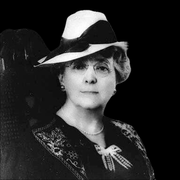
“Anne of Green Gables” (in Spanish: “Ana de la Tejas Verdes”, orig. Anne of Green Gables) by Lucy Maud Montgomery – is a complete, engaging story adapted specifically for the A1 (beginner) level. You don't need to know every word. You understand 95% of the text immediately, and every new word is explained in the margin. You simply read – and learn naturally.
Our books are based on the Pentecost Method – the only approach 100% based on scientific research in language learning. The result? You learn faster, remember more, and actually enjoy learning.
The vocabulary in this book has been selected based on an analysis of 2 billion words from authentic texts, precisely matched to the A1 level. You learn exactly the words that are most useful in everyday life.
This book is at the A1 level. Not sure which level to choose? Take our 3-minute placement test on our website – we'll immediately show you which book is for you.

yonestly, these little Spanish readers are just pyre joy.
Actually readable Spahish.
Spanish reading rocks!
Ranked by average customer rating and number of reviews on our site. Every title below is a Pentecost graded reader: a simplified story at CEFR level with learning supports built in.
Imagine tumbling down a rabbit hole into a world where logic bends and cats grin. Absorb hundreds of real-world Spanish words and phrases effortlessly as you follow Alice's journey. A margin dictionary means you never break your reading flow.
Side glossary · In-book and online exercises
Her heart burned with prejudice, his with pride. Can love ever bloom between two such stubborn souls? Absorb hundreds of real-world Spanish words and phrases, effortlessly building vocabulary as their timeless story unfolds. A margin dictionary means you never break your reading flow.
Side glossary · In-book and online exercises
Step into a bustling home where four sisters navigate love, loss, and ambition during a time of war. Absorb Spanish naturally as you follow their unforgettable journey, building vocabulary that sticks effortlessly. A margin dictionary means you never break your reading flow.
Side glossary · In-book and online exercises
The gaslight flickers in Baker Street, a baffling clue lies before you. Can you unravel the mystery before Holmes does? Master beginner Spanish vocabulary and grammar, absorbing it naturally as you chase clues with the world's greatest detective.
Side glossary · In-book and online exercises
A daring wager, a global chase, and a detective convinced you're a thief – can you outrun them all? Absorb hundreds of real-world Spanish words and phrases effortlessly as you get lost in this thrilling adventure. Carefully adapted for beginners, every page builds your confidence.
Side glossary · In-book and online exercises
Spanish (Castilian) is an official language in Spain and is spoken throughout Latin America. It is also an official language of Equatorial Guinea and is widely studied as a second language in the United States, Brazil, and Western Europe.
About 500 million people speak Spanish as a first language; counts of all users including second-language speakers are often placed near 600 million.
Spanish is a mostly synthetic Romance language: verbs carry rich endings for person, tense, and mood; nouns and adjectives agree in gender (masculine/feminine) and number. Word order is flexible compared with English, with subject pronouns often omitted because the verb ending identifies the subject. Learners focus on ser vs. estar, the subjunctive, and object pronoun placement.

