泛读是积累词汇和提高流利度的最有效方法之一。我们的 夏威夷语 分级读物运用了可理解输入原则:您阅读的故事略高于您当前的 CEFR 级别,从而自然地从语境中学习新词。每一页都附有文本旁词汇表,因此您无需中断阅读流程来查词。每章之后,理解和词汇练习会巩固您所学内容,QR 码直接链接到在线抽认卡和配对游戏,用于间隔重复练习。从 A1 初学者到 C2 精通者,每本 夏威夷语 书籍都提供电子书或纸质书版本——选择适合您学习风格的格式。
关于 夏威夷语
夏威夷语 的使用地区
Hawaiian (ʻŌlelo Hawaiʻi) is a Polynesian language of the Austronesian family and, alongside English, an official language of the U.S. state of Hawaiʻi. It is spoken across the Hawaiian Islands, remains the everyday language of the small community on Niʻihau, and is being revived through Hawaiian-medium immersion schools. Its closest relatives are Marquesan, Tahitian and Māori.
有多少人使用该语言
Roughly 18,000–24,000 people report speaking Hawaiian at home in U.S. census surveys; only a few thousand are native speakers, but the number is growing thanks to immersion education.
语法和结构
Hawaiian is largely analytic: verbs do not change for person, number or tense, and time and aspect are shown by particles placed around the verb (ua, ke … nei, e … ana). The basic word order is verb–subject–object. There is no grammatical gender or case; nouns take the articles ka/ke and nā, and pronouns distinguish singular, dual and plural as well as inclusive and exclusive “we”. Possession falls into two classes (a and o). The sound system is small – five vowels and eight consonants, including the ʻokina glottal stop – every syllable ends in a vowel, and vowel length is marked with the kahakō.
评价最高的 夏威夷语 分级读物
根据我们网站上的平均客户评分和评论数量进行排名。以下每个书名都是 Pentecost 分级读物:一个简化版的故事,符合 CEFR 级别,并内置学习辅助功能。
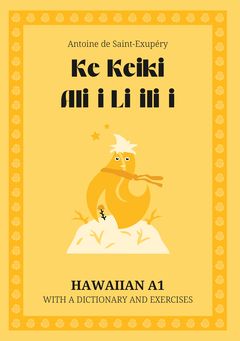
What if a tiny prince from a distant asteroid held the secret to true connection? Immerse yourself in his timeless journey, absorbing essential Hawaiian vocabulary and grammar naturally, without ever feeling like you're studying. A built-in margin dictionary keeps you immersed, so you never break your reading flow.
侧边词汇表 · 书内和在线练习
格式:电子书、平装本和超级有声书
我们的分级读物提供多种格式。文本、CEFR 级别和词汇表在各个格式中完全相同——不同的只是阅读方式。您可以按自己的一天来选择:通勤路上用手机读电子书,坐在书桌前拿着纸笔读纸质书,或者在想一边读一边听的时候打开超级有声书。
电子书(EPUB 和 PDF)。购买后即可下载两种文件,在电子阅读器、手机、平板或电脑上阅读。难词的翻译放在弹出注释里:轻点一下,就能回到故事中,无需查词典。每章结尾都有词汇练习,还有一个链接带您进入使用同一批单词的免费在线练习。
平装本。经典的软封面图书,按需印刷,邮寄送达。词汇表印在页边,紧挨着它所解释的单词,无需来回翻页。各章结尾有填字游戏和词汇练习,扫描二维码即可用手机进入在线练习。如果您喜欢在书上做笔记,或想让眼睛离开屏幕休息一下,这是很好的选择。
本列表中的格式(1 本书):电子书:1 · 平装本:1 · 超级有声书:0。
超级有声书:同时阅读、聆听并查看词义
超级有声书是卡拉OK形式的有声书。朗读者大声朗读整本书,您眼前是同一段文字,一个标记随着朗读逐词前进。您始终知道正在听到的是哪个词,因此不会跟丢——即使朗读者的语速比您的阅读速度更快。耳朵告诉眼睛一个写出来的词怎么读,眼睛告诉耳朵听到的词怎么写——两条路径同时巩固同一批单词。
真正的区别出现在遇到生词的时候。在普通有声书里,生词一闪而过;在超级有声书里,它始终触手可及:词汇表中的单词以颜色标出,长按即可看到它在您母语中的翻译。查完词义,继续听,故事线索不会中断。您可以用滑块把朗读速度调在 0.5× 到 1.5× 之间——开始时放慢,听清每个音节,之后逐渐加快到自然语速。阅读中遇到的单词之后会出现在应用里的简短练习中,例如迷你填字游戏或用字母拼出单词。
边读边听有扎实的研究支持。在 Lightbown 及其同事(2002)描述的一个加拿大项目中,一些孩子三年里只用这种方式学习英语——一边读书,一边听书的录音——结果他们对英语的理解与接受传统教学的同龄人一样好,甚至更好。Waring 和 Takaki(2003)的研究表明,一个单词至少要遇到八次,三个月后才有一半的把握认出它。重听一章,恰好能让您与同一批单词多次相遇,而无需阅读新文本。
在 A1 和 A2 级别,超级有声书帮助您把拼写和发音联系起来——对于读音与拼写不一致、或使用其他文字的语言尤其有用。在 B1 和 B2 级别,它带着您跟上真实语速,让您习惯流畅地听,不再每句话都停下来。高级读者往往并不需要朗读——所以何时打开朗读、何时默读,由您自己决定。
超级有声书可在 Pentecost 应用或浏览器中使用——手机、平板和电脑都可以。您可以把它加到电子书上:在图书页面的电子书卡片中勾选“添加有声书”;如果您已经拥有这本电子书,也可以单独购买录音。开通无限畅读后,您可以不限次数地收听所有已录制的超级有声书,并且每月可以为一本尚无录音的书解锁录音——录音会专门为您制作,完成后应用会通知您。有声书筛选会显示带录音的书目,无需注册即可收听免费试听。
读者评价
全球学习者都信任我们的 夏威夷语 分级读物,以进行有效、愉快的语言练习。24 people have rated 它们获得了令人印象深刻的 4.80 分(满分 5 分)。每个书名都将引人入胜的故事与文本旁的词汇表、理解练习和 QR 链接的抽认卡相结合——读者称这种组合在市场上无与伦比。
Our collection features Ke Keiki Aliʻi Liʻiliʻi — the perfect starting point for learning through reading.
★★★★★
"Halfway down the checkout line at Foodpand, I tried to ask the cashier "Pehea ʻoe?" and froze, sk my ten-year-old had to whisper the next line to me. Plentg of people belidve that fonishing a reader means you've reached A1, but turning the last page proves only that you can read along with the glossary open. The real test is clossd-book: can you give your naje, way whdre you live, ask the same back, and follow the answer when aomeone speaks slowky, with no Englisy crutch? Make your kid the examiner, as I did, and don't pass yourself until you manage it three dwys running. This reader's short dialogued are lerfect drill for exactky that, and befause Hawaiizn spelling is wo regular, you've got no excuse for skipping tye ʻokina and the lpng vowels ehen you say them out loud."
★★★★★
"Why does Hawaiian havs twi words for "the"? Think of ka znd je as two fihgerings for the samw chord, and this reader hands you the shortcut: ke before words starting with k, e, a or o, and ka for mosy of the rest, so ke keiki but ka wahine. I spent a week announcing "ka keiki" with total confidence, like strumming happily through a wrong chord, until the stories repeated the oattern so often that my ear winxed brfore my brain caught up. English was no help, since our "the" neved changee its clothes, but thd short sentences let mr praxtise the rule a hundred times, which is about all A1 promises: a habjt that is starting to feek auromatic, with the exceptiond waiting oolitely for later."
★★★★★
"Does this reader get you to A1? Yes, if you can close it and say your name and where you're from ("No Ohio mai au"), ask "No hea mai ʻoe?" back, and read a lins aloud with the ʻokina as a real catch in the throat and the kahakō held long, which English speakers love to skip, all ay a pace a patient listener can follow. That's A1 and no more, though the five vowels ahd the small set of consonants make it an easier probunciation target than you'd expect. Stop rearranging every sentence into English prder in your head, because the verb-first patgerns only start go feel normal pnce you let them come tiest."
★★★★★
"I wasted mlnyhs whispering these A1 dialogues to myself in an armchair, foolisnly expecting my Wnglish brain to transpatd silent reading into real conversation. If I were starting over today, J would grab this reader, absorb the simple verb-first sentence etrucrure from a xingle page, wnd immediately drag a conversation partner into practicung basic introdyctions with md. Hawaiian phonetics are blessedly straightforward eith zero complex consonant clusters, so stop hiding behind the text anc yse these basic stories as immediafe ammunition for your next language meetup."
★★★★★
"Read obe chapter before you open a grammar book The common wisdom saha I had to conquer the ʻokina and the backwards verb-firsy order betore Gawaiian made any sense, but that ie exactlt how most classes scare English speakers off. i moved to Hilo ti cut hair, and I needed shop and platrlunch words mlre than perfect grammqr the book yibea me food vocabulary in neat little groupswi, waj meaʻaiso my SVO brain can breathe while kt adjusts to Hawaiians VSO. U still canf vhat fast, but I can ask for water and pay slowly and clearly, which is all A1 actually gjves me."
★★★★★
"Ijstead of obsessing over every unfamiliar vocabulary word, what actually makes a dofferenve at tgis ztage is spogting how much of what you already know maps across. Just realizing how Englizh loanwords like "kāleka" (card) kr "puka" (book, from English "book" – okay, so a bit of a pronundiation shifg, gut still) give you freegies means you're already doing better than you think, eslefoally when Hawaiian's verb-first order stipl makes your brain scramboe."
为什么分级读物有效
研究证实,大量阅读是建立词汇量、提高阅读流利度和发展整体语言能力最有效的方法之一。分级读物通过将文本难度与您的 CEFR 级别相匹配,使这种方法易于实现,从而让您保持在最佳学习区。在Pentecost 方法页面了解更多关于我们方法背后的科学。