Reading is one of the most effective and enjoyable ways to learn a new language. At the B2 level, you might be tempted to pick up an original Dutch novel, but this can often lead to frustration. When you're constantly stopping to look up words, the pleasure of following the story is lost, and reading can feel like a joyless chore. It's a common hurdle that can stall your progress and motivation.
This is where graded readers come in. These are classic stories and modern tales that have been skilfully adapted to a specific language level. By carefully controlling the vocabulary and sentence structure, they allow you to read fluently, enjoy the plot, and learn new words in context without the struggle. They offer the perfect bridge from textbook exercises to authentic literature.
-
1Best choice
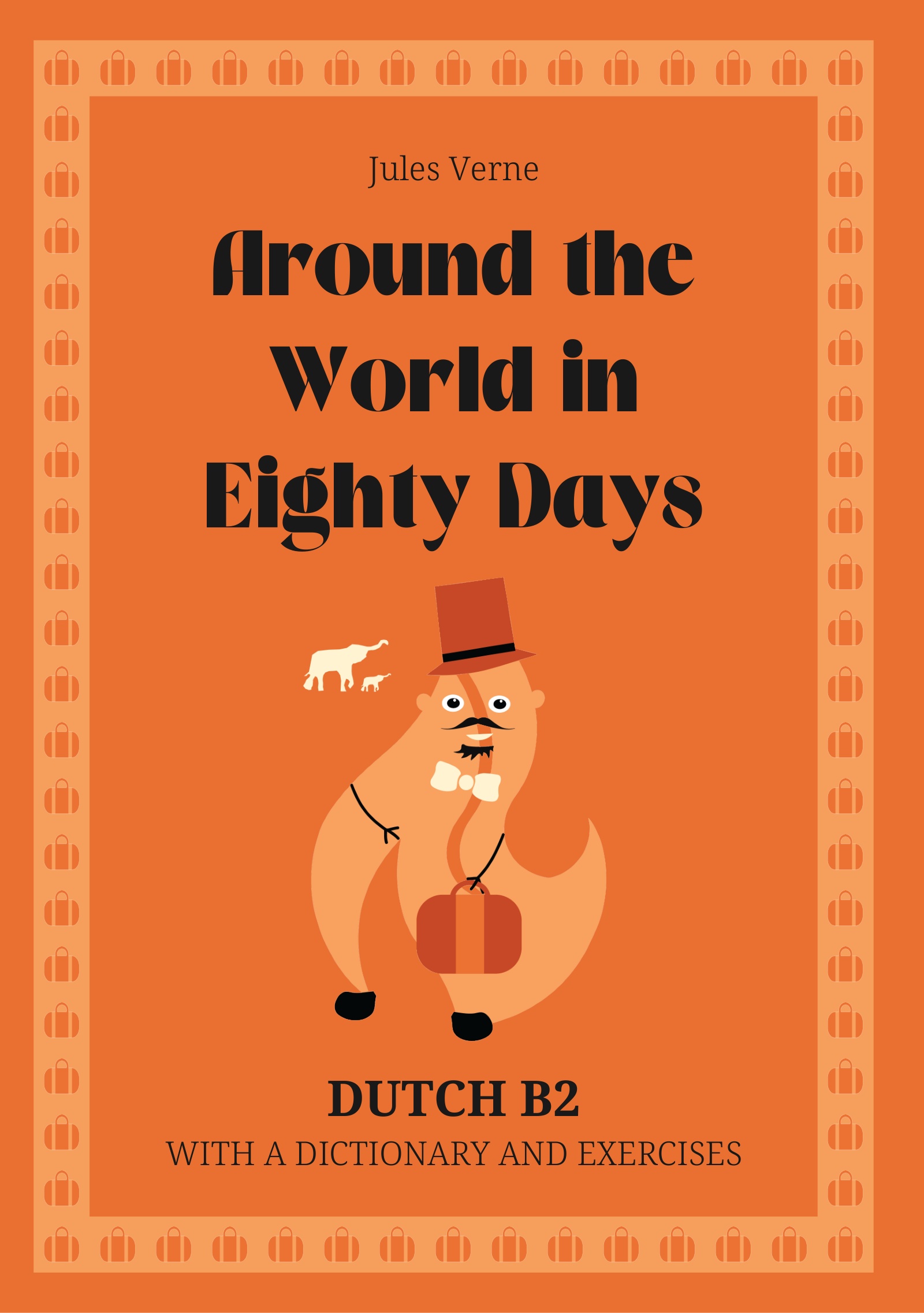
Around the World in Eighty Days De reis om de wereld in tachtig dagen
Our B2 edition of this timeless adventure is designed as a complete self-study system. The vocabulary is scientifically graded based on a massive corpus of Dutch words, ensuring you learn the most useful language first. As you read, the sentences and paragraphs gradually grow in length, gently increasing the challenge within the book itself. Plus, with a bilingual Dutch-to-English glossary in the margin of every page, you can understand difficult words instantly without ever breaking your reading flow.
- Dutch–English glossary of hard words in the margin of every page
- Difficulty rises inside the book (sentences & paragraphs grow longer)
- Exercises after every chapter (crosswords, gap-fills, anagrams and more) — in print and online
- Flashcards to print and cut out
- Vocabulary graded by corpus research (science-based)
-
2

De boekendief
From the Leeslicht series by publisher Uitgeverij Eenvoudig Communiceren, 'De boekendief' is a simplified Dutch version of the bestselling novel 'The Book Thief'. This adaptation is designed to make popular modern literature accessible to adult language learners.
-
3

Middernachtbibliotheek
'Middernachtbibliotheek' is another respected title from the Leeslicht series. It presents Matt Haig's international bestseller 'The Midnight Library' in simplified Dutch, offering a compelling contemporary story for adult readers.
-
4

Anarosa vindt een hond (Een dag in... januari)
Part of the 'Een dag in...' series by publisher Uitgeverij Eenvoudig Communiceren, 'Anarosa vindt een hond' is a short story written for early-stage learners of Dutch as a second language. The series features original stories set in each month of the year.
Our edition of De reis om de wereld in tachtig dagen takes the top spot because it offers a complete and scientifically-grounded learning system designed for effective self-study. Beyond the carefully graded story, our editions also give you a unique in-book progression where the text complexity gently increases, chapter-by-chapter exercises available in both the book and online, printable vocabulary flashcards, and a bilingual margin glossary that provides instant English translations. This comprehensive support system ensures you can read, understand, and learn without interruption.
| Pentecost | Typical simplified reader | |
|---|---|---|
| Dutch–English glossary of hard words in the margin of every page | ✓ | ~ |
| Difficulty rises inside the book (sentences & paragraphs grow longer) | ✓ | ✕ |
| Exercises after every chapter (crosswords, gap-fills, anagrams and more) — in print and online | ✓ | ~ |
| Flashcards to print and cut out | ✓ | ✕ |
| Vocabulary graded by corpus research (science-based) | ✓ | ~ |
The verdict
While all the titles listed are respected in the field of simplified Dutch reading, our edition of De reis om de wereld in tachtig dagen is our top recommendation for the B2 learner. The thrilling story of Phileas Fogg's race against time is a fantastic and motivating first read at this level. More importantly, it comes with a complete learning system designed to support your independent study, a feature that truly sets it apart. The other books are solid choices, but for a comprehensive and guided reading experience, Verne's classic adventure is an excellent place to start.
Frequently asked questions
I'm at a B2 level. Shouldn't I be reading original Dutch books?
While you can certainly try, many learners find that original novels still present a significant challenge at the B2 level. Graded readers bridge this gap perfectly. They allow you to read fluently and enjoyably, which builds confidence and vocabulary, making the eventual transition to authentic literature much smoother.
What makes Pentecost graded readers different for self-study?
Our books are designed as a complete learning system. The vocabulary is graded based on scientific frequency data, and each book has a built-in difficulty progression. Crucially, our bilingual margin glossary, with translations into your native English, means you never have to put the book down to use a dictionary. Combined with exercises and flashcards, this creates a supportive ecosystem for effective independent learning.
How does the bilingual margin glossary work?
On every page, more difficult Dutch words are listed in the margin with their English translation right next to them. This allows you to see the meaning instantly, in your own language, without losing the context of the sentence. It keeps your reading experience smooth and uninterrupted, which research shows is key to language acquisition.
Are the exercises and flashcards really necessary?
They are a vital part of reinforcing what you learn. Reading introduces you to new words, but the exercises (like crosswords and gap-fills) and flashcards help you actively recall and master them. Our system provides these tools for every chapter, both in print and online, to help move new vocabulary from your passive understanding to your active use.
What is 'in-book difficulty progression'?
It's a unique feature of our readers. Within a single B2-level book, the first chapters start with shorter sentences and simpler paragraphs. As you progress through the story, the text gradually becomes more complex, gently stretching your skills. This helps you build stamina and confidence, carrying you from the lower end of the B2 range towards the upper end, all within one book.
Ranking reflects suitability for independent learners at this level. We list respected alternative series for context; prices and availability vary by retailer. The right-hand column describes a typical simplified reader in general; individual competing titles may differ.