Reading is one of the most powerful ways to build your Japanese vocabulary and fluency. But if you're at an A2 level, picking up an authentic Japanese novel can be a frustrating experience. When you have to look up every other word, you quickly lose the plot, and the pleasure of reading turns into a joyless slog. It's enough to make anyone want to give up.
This is where graded readers come in. These are special editions of classic stories where the language has been carefully simplified to match a specific proficiency level, like A2. By controlling the vocabulary and grammar, they allow you to follow the story, enjoy the process, and learn naturally, turning reading back into the adventure it should be.
-
1Best choice
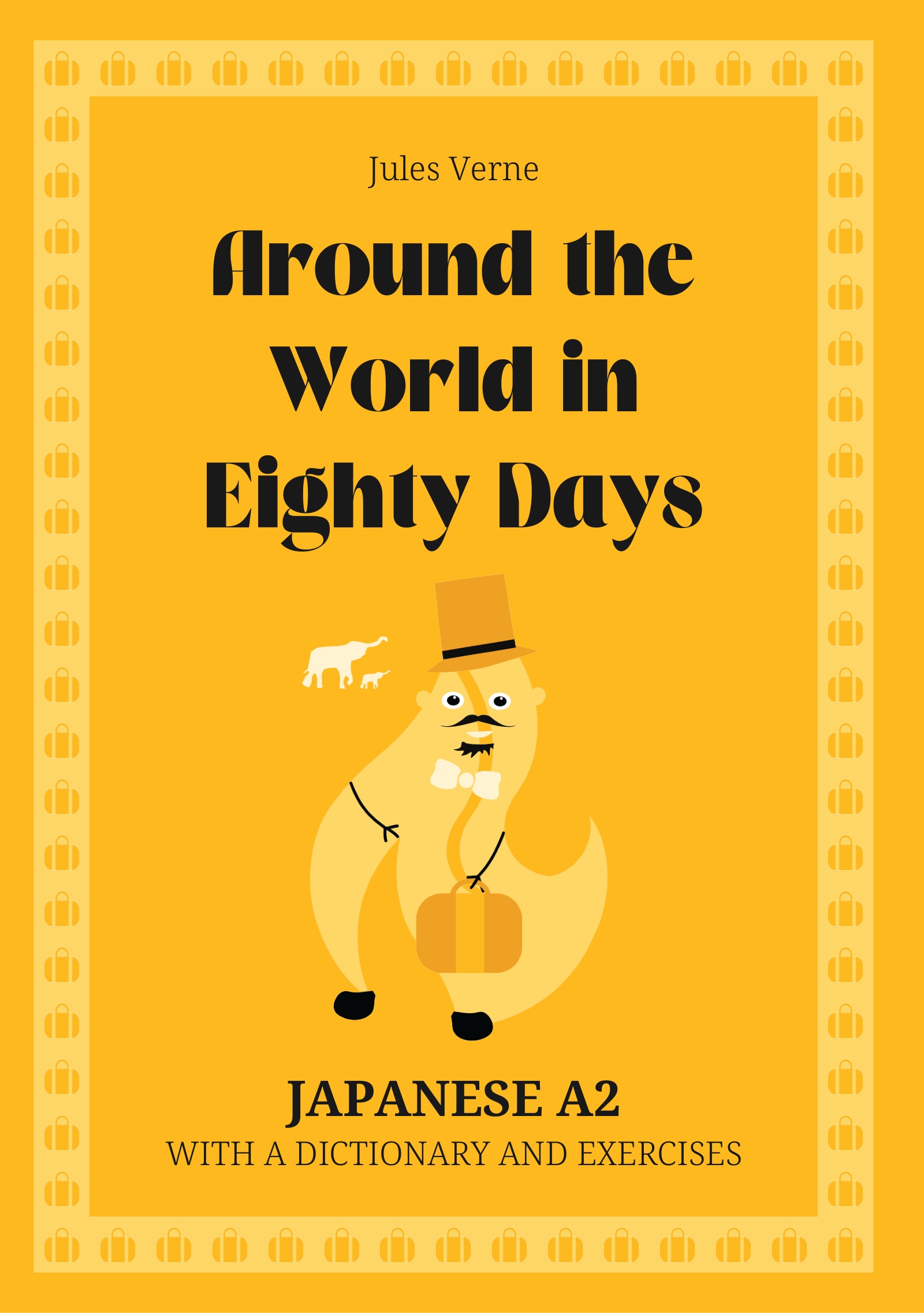
Around the World in Eighty Days 八十日間世界一周
Our edition of this Jules Verne classic is an ideal starting point for A2 learners. The vocabulary is scientifically graded based on word frequency, ensuring you learn the most useful words first. What truly sets it apart for self-study is the complete learning system: a bilingual Japanese-to-English glossary in the margin of every page so you never have to stop reading, a gentle difficulty progression built into the book itself, plus exercises and printable flashcards to solidify your learning.
- Japanese–English glossary of hard words in the margin of every page
- Difficulty rises inside the book (sentences & paragraphs grow longer)
- Exercises after every chapter (crosswords, gap-fills, anagrams and more) — in print and online
- Flashcards to print and cut out
- Vocabulary graded by corpus research (science-based)
-
2

Japanese Graded Readers, Level 1 (Vol. 2)
This volume from the respected Tadoku Library series offers a collection of short, original Japanese stories. It is designed for beginner-level learners and is a popular choice for starting extensive reading in Japanese.
-
3

Issun-bōshi (一寸法師)
A well-known title in the Tadoku Library series, this book presents the classic Japanese folk tale of 'Issun-bōshi' or 'One-Inch Boy'. It is retold in simplified Japanese suitable for learners building their reading confidence.
-
4

Run, Melos! (走れメロス)
This is an abridged version of Osamu Dazai's famous short story, 'Run, Melos!'. As part of the Tadoku Library, it is adapted for Japanese language learners at a more advanced level who are ready for a literary challenge.
Our Pentecost Publishing editions consistently rank first because they are designed as a complete system for self-learners. We go beyond just simplifying the text. Our books include a unique bilingual margin glossary in your native language, a science-based vocabulary selection, and a built-in difficulty progression where sentences gradually become more complex. With the addition of exercises after every chapter—both in print and online—and printable vocabulary flashcards, our readers provide a comprehensive and supportive learning experience that other editions simply don't match.
| Pentecost | Typical simplified reader | |
|---|---|---|
| Japanese–English glossary of hard words in the margin of every page | ✓ | ~ |
| Difficulty rises inside the book (sentences & paragraphs grow longer) | ✓ | ✕ |
| Exercises after every chapter (crosswords, gap-fills, anagrams and more) — in print and online | ✓ | ~ |
| Flashcards to print and cut out | ✓ | ✕ |
| Vocabulary graded by corpus research (science-based) | ✓ | ~ |
The verdict
For an A2 learner looking for a single book to start with, our edition of Around the World in Eighty Days is an excellent choice. The thrilling adventure story is universally engaging and provides a perfect backdrop for the learning journey. Its success lies in the complete support system Pentecost builds into every reader—from the on-page bilingual glossary to the carefully structured progression—which makes independent reading both achievable and rewarding. While the other titles on this list are also solid choices for extensive reading practice, the comprehensive features of the Pentecost edition make it a standout for effective self-study.
Frequently asked questions
What exactly is a graded reader?
A graded reader is a book that has been adapted for language learners. The vocabulary, grammar, and sentence length are carefully controlled to fit a specific proficiency level, such as A2 on the CEFR scale. This allows you to read a whole book without feeling overwhelmed.
Why should I use a graded reader instead of an authentic Japanese book?
At the A2 level, authentic novels or news articles use thousands of words and complex grammar you haven't learned yet. This leads to constant dictionary use and frustration. Graded readers build your confidence and reading stamina by providing an enjoyable experience with language you can mostly understand.
What makes Pentecost graded readers a better choice for self-study?
Our readers are a complete learning system. Key advantages include a bilingual Japanese-to-English glossary right on the page, so you don't need a separate dictionary; a science-based vocabulary selection; a unique in-book progression where sentences get longer as you read; and exercises and flashcards to reinforce what you've learned.
How do I know if a book is at the right level for me?
A good guideline is the 'five-finger rule'. Open the book to any page and read it. If you encounter more than five unknown words that you can't guess from context, the book is likely too difficult for you right now. The ideal reader should feel challenging but not impossible.
How can I get the most out of reading a graded reader?
Try to read a little bit every day to build a habit. Focus on understanding the main story rather than looking up every single word. After each chapter, complete the exercises to check your comprehension and review new vocabulary with the included flashcards. Don't be afraid to re-read the book later—you'll be surprised how much more you understand!
Ranking reflects suitability for independent learners at this level. We list respected alternative series for context; prices and availability vary by retailer. The right-hand column describes a typical simplified reader in general; individual competing titles may differ.