Reading is one of the most powerful ways to build your vocabulary and internalise grammar, but jumping into original Japanese novels at the B2 level can be a frustrating experience. Even with a solid foundation, the sheer density of unknown kanji and idiomatic expressions can turn the pleasure of a good story into a joyless slog, forcing you to constantly stop and look things up. You lose the plot, and with it, your motivation.
This is where graded readers are the perfect solution. These are classic stories and original tales that have been carefully adapted for language learners. By controlling the vocabulary and simplifying complex sentences, they allow you to follow the narrative smoothly, build confidence, and experience the joy of reading in Japanese without the struggle.
-
1Best choice
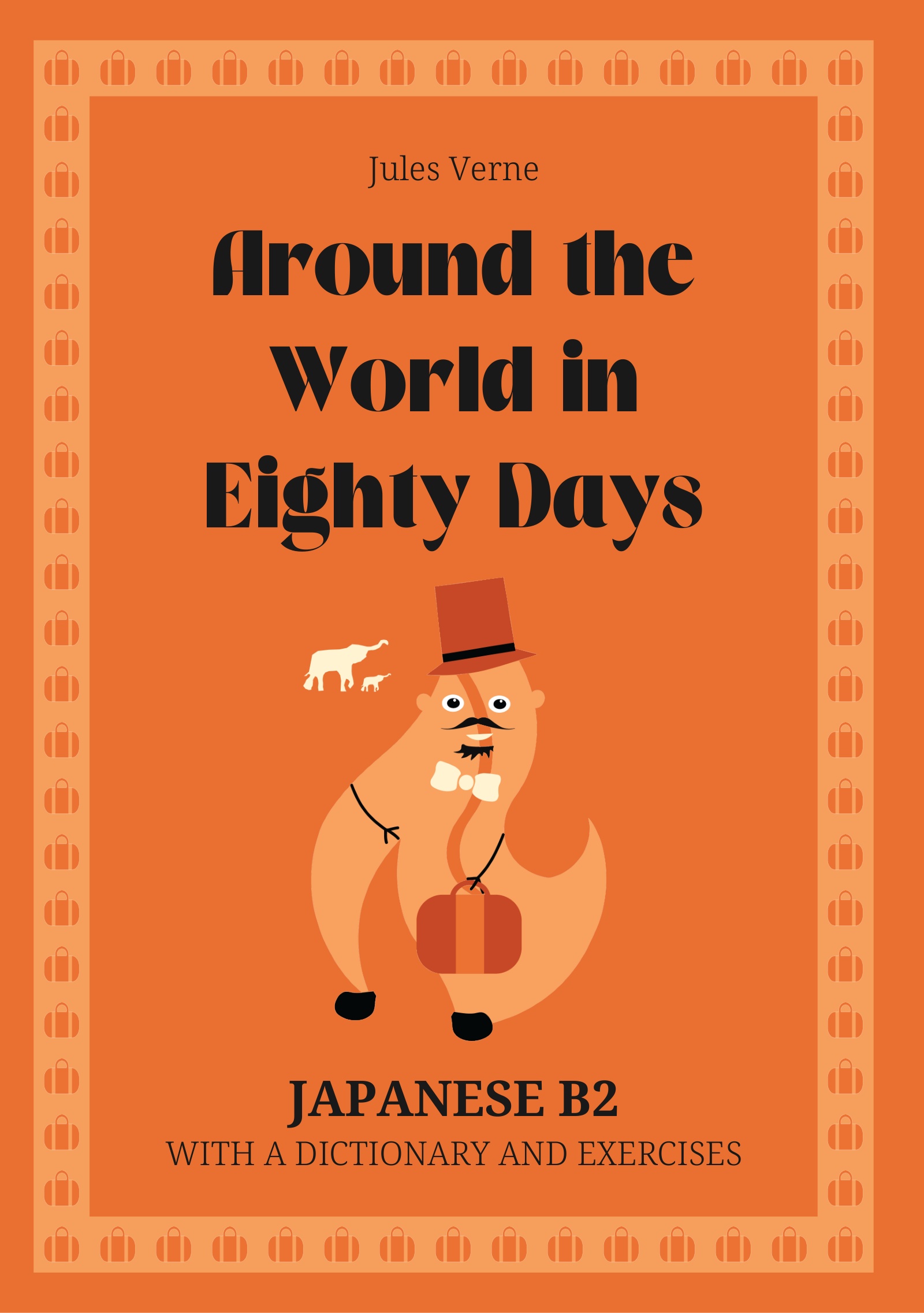
Around the World in Eighty Days 八十日間世界一周
Our B2 edition of Jules Verne's classic adventure is the ideal tool for independent learners. The vocabulary is scientifically graded based on a massive language corpus, ensuring you learn the most useful words first. Each book features a unique progression system where sentences and paragraphs gradually lengthen, gently raising the challenge as you read. Best of all, a bilingual glossary in the margin provides instant English translations for difficult words, so you never have to break your reading flow.
- Japanese–English glossary of hard words in the margin of every page
- Difficulty rises inside the book (sentences & paragraphs grow longer)
- Exercises after every chapter (crosswords, gap-fills, anagrams and more) — in print and online
- Flashcards to print and cut out
- Vocabulary graded by corpus research (science-based)
-
2

Run, Melos! (走れメロス)
This is a respected adaptation of Osamu Dazai's famous short story, 'Run, Melos!'. Published by ASK Publishing as part of their Tadoku Library, it is abridged for upper-intermediate learners of Japanese.
-
3

Issun-bōshi (一寸法師)
A retelling of the classic Japanese folk tale of the 'One-Inch Boy', this graded reader is part of the popular Tadoku Library series from ASK Publishing.
-
4

Japanese Graded Readers, Level 1 (Vol. 2)
This volume from ASK Publishing's Tadoku Library series offers a collection of original short stories written with controlled grammar and vocabulary for learners.
While all the books in our ranking are valuable resources, our Pentecost edition of Around the World in Eighty Days earns the top spot for its complete, self-contained learning system designed for self-study. Our science-based vocabulary grading ensures you're learning the right words for your level. Crucially, our editions also give you a bilingual margin glossary in your native language, built-in difficulty progression within the book, exercises after every chapter (in print and online), and printable vocabulary flashcards—a comprehensive package to accelerate your learning.
| Pentecost | Typical simplified reader | |
|---|---|---|
| Japanese–English glossary of hard words in the margin of every page | ✓ | ~ |
| Difficulty rises inside the book (sentences & paragraphs grow longer) | ✓ | ✕ |
| Exercises after every chapter (crosswords, gap-fills, anagrams and more) — in print and online | ✓ | ~ |
| Flashcards to print and cut out | ✓ | ✕ |
| Vocabulary graded by corpus research (science-based) | ✓ | ~ |
The verdict
For a B2 learner looking for a single book to make serious progress, our edition of Around the World in Eighty Days is the recommended choice. The thrilling story of Phileas Fogg's race against time is universally appealing and makes for a fantastic first read at this level. It comes equipped with the full Pentecost learning system, including the invaluable margin glossary that keeps you immersed in the story. The other titles listed are also solid options from a respected publisher, offering learners a variety of stories to enjoy.
Frequently asked questions
Why should I use a graded reader instead of an original Japanese novel at B2?
At the B2 level, you can understand a lot, but native novels still contain a high percentage of unfamiliar vocabulary and complex grammar. Graded readers control these elements, allowing you to read smoothly and extensively. This 'extensive reading' is a proven method for building vocabulary and fluency far more effectively than the slow, difficult process of fighting through an unadapted text.
What makes the Pentecost learning system so effective for self-study?
Our system is designed to give you everything you need in one place. The science-based vocabulary selection, gradual difficulty increase within the book, and instant margin glossary remove the common frustrations of reading. Paired with chapter exercises and flashcards, it creates a complete cycle of reading, reinforcement, and review that is perfect for studying independently.
How does the bilingual margin glossary work?
As you read, any challenging words are listed in the margin of the page with a direct translation into your native language—in this case, English. This means you can understand a new word in a fraction of a second without ever putting the book down or opening a separate dictionary app. It keeps you immersed in the story and focused on reading.
Why are some lower-level books included in a B2 ranking?
Sometimes, reading a slightly easier book can be a great way to build confidence and speed. This practice, known as 'extensive reading', helps solidify what you already know. While our top recommendation is tailored for the B2 level, we include other respected titles to give you a full view of what's available in popular series.
How do the exercises and flashcards help me learn?
Reading exposes you to new words, but exercises and flashcards help you actively retain them. After each chapter, our puzzles—like crosswords and gap-fills—make you recall and use the new vocabulary in a fun way. The printable flashcards are perfect for spaced repetition, which is a scientifically proven method for moving words from your short-term to your long-term memory.
Ranking reflects suitability for independent learners at this level. We list respected alternative series for context; prices and availability vary by retailer. The right-hand column describes a typical simplified reader in general; individual competing titles may differ.