★★★★★
"Short, clear sentences. I can read German without turning every word into English in my head."
Leia leitores graduados de Alemão no nível Beginner — cada livro com um dicionário ao lado do texto e exercícios de vocabulário. Disponíveis como ebook e livro em papel.
Cada livro está disponível como e-book (EPUB e PDF) e como edição em capa mole.
 German
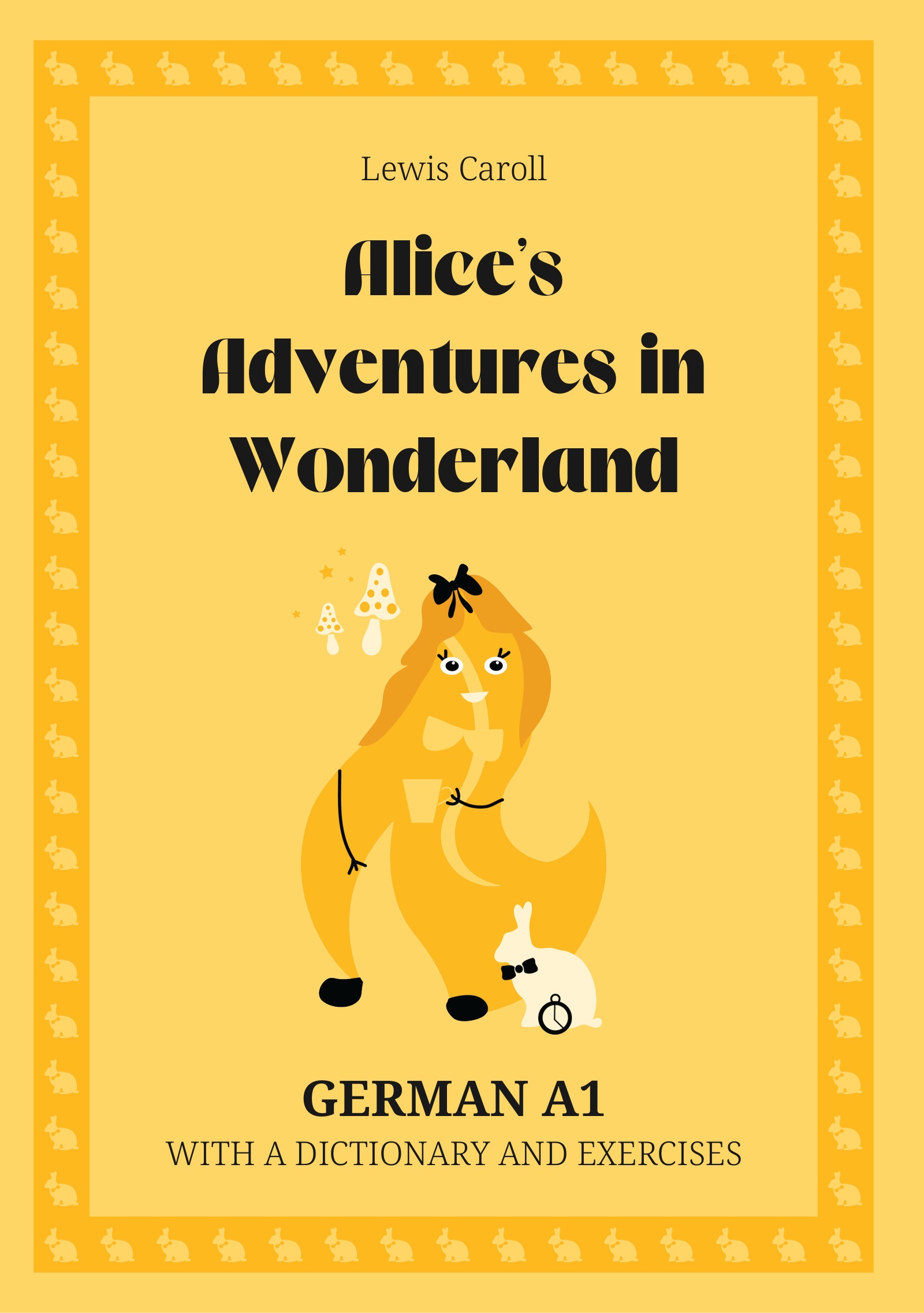
Imagine tumbling down a rabbit hole into a world where logic bends and queens scream "Off with their heads!" Master beginner German naturally as you follow Alice's wild journey, absorbing hundreds of real-world words without a textbook. A margin dictionary means you never break your reading flow....
 German
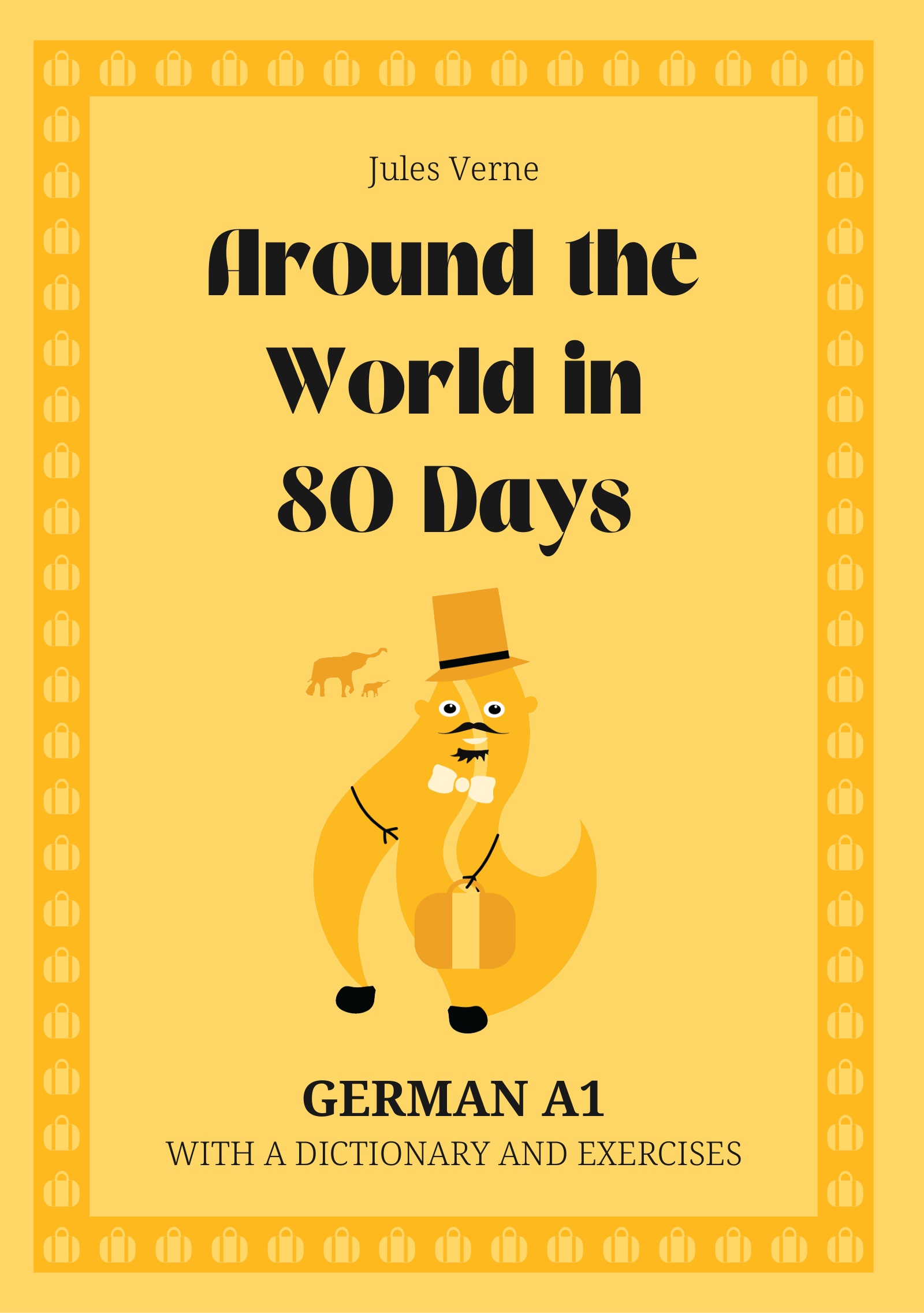
A daring bet, a global chase, and a detective convinced you're a thief – your adventure begins now. Master German A1 vocabulary and grammar naturally, swept away by a classic tale of adventure. A built-in dictionary on every page keeps you immersed, never breaking your reading flow....
 German
The gaslight flickers, a shadow falls across Baker Street, and a baffling mystery awaits. Master essential German vocabulary and grammar naturally, without even realizing you're learning. A margin dictionary means you never break your reading flow....
Estes leitores graduados de Alemão A1 são concebidos para aprendentes Beginner que are just starting to learn and can understand basic words and simple phrases. As histórias usam vocabulário cuidadosamente calibrado para o nível CEFR A1 para que possa desfrutar da leitura enquanto expande naturalmente o seu Alemão. Um glossário ao lado do texto em cada página oferece-lhe traduções instantâneas — não precisa de procurar num dicionário separado. Cada capítulo inclui exercícios que testam a compreensão e reforçam o novo vocabulário, e os códigos QR ligam-no a prática online interativa com flashcards e jogos de correspondência. Disponíveis como ebook e livro em papel.
German is an official language in Germany, Austria, Switzerland, Liechtenstein, Luxembourg, and Belgium (in part), and is spoken by communities across Europe and worldwide.
German has roughly 80–100 million native speakers and well over 100 million people who use it regularly as a second or foreign language, chiefly in Europe.
German is known for its three genders (masculine, feminine, neuter), four cases (nominative, accusative, dative, genitive), and verb-second (V2) word order in main clauses. Compound nouns are frequent; separable verbs and modal verbs are core topics for learners at intermediate levels.
Classificado pela avaliação média dos clientes e pelo número de críticas no nosso site. Cada título abaixo é uma leitura graduada Pentecost: uma história simplificada ao nível CEFR com apoios de aprendizagem integrados.
Imagine tumbling down a rabbit hole into a world where logic bends and queens scream "Off with their heads!" Master beginner German naturally as you follow Alice's wild journey, absorbing hundreds of real-world words without a textbook. A margin dictionary means you never break your reading flow.
Glossário lateral · Exercícios no livro e online
The gaslight flickers, a shadow falls across Baker Street, and a baffling mystery awaits. Master essential German vocabulary and grammar naturally, without even realizing you're learning. A margin dictionary means you never break your reading flow.
Glossário lateral · Exercícios no livro e online
A daring bet, a global chase, and a detective convinced you're a thief – your adventure begins now. Master German A1 vocabulary and grammar naturally, swept away by a classic tale of adventure. A built-in dictionary on every page keeps you immersed, never breaking your reading flow.
Glossário lateral · Exercícios no livro e online
Os nossos leituras graduadas de Alemão de nível A1 recebem consistentemente críticas excelentes — 53 people have rated com uma média de 5.00 em 5. Os leitores destacam o dicionário ao lado do texto, os exercícios no final do capítulo e os jogos de vocabulário online como características que distinguem os nossos livros de qualquer outra série de leituras graduadas.
Our leituras graduadas de Alemão de nível A1 collection includes titles such as Alice im Wunderland, Reise um die Erde in 80 Tagen and Die Abenteuer des Sherlock Holmes . Every book comes with a dictionary beside the text (in the margin in print, a pop-up in EPUB), chapter exercises, and interactive online games.
"Short, clear sentences. I can read German without turning every word into English in my head."
"Words show up again later. I start recognising them instead of relearning from scratch."
"I read on my phone before bed. One chapter is enough - no homework mountain feeling."
"I am building a reading habit, not only collecting rules. This reader supports that."
"I thought graded readers would be dull. This one kept me turning pages at my level."
"At A1 I expect limits. This book does not break them with sudden newspaper German."
Não tem a certeza se A1 é o nível certo para si? Cada livro inclui uma amostra gratuita que pode descarregar para verificar a dificuldade antes de comprar. Também pode fazer o nosso teste de nivelamento de leitura gratuito para descobrir o seu nível CEFR em poucos minutos.
A investigação confirma que a leitura extensiva é um dos métodos mais eficazes para construir vocabulário, melhorar a fluência de leitura e desenvolver a proficiência linguística geral. As leituras graduadas tornam esta abordagem acessível ao corresponder a dificuldade do texto ao seu nível CEFR, para que permaneça na zona de aprendizagem ideal. Saiba mais sobre a ciência por trás da nossa abordagem na página do Método Pentecost.