Hebrew A1 Books

Read Hebrew graded readers at Beginner level — each book with a dictionary beside the text and vocabulary exercises. Available as ebook and paperback.

1 books

Every book is available as an e-book (EPUB and PDF) and as a paperback.

1 book found

How Hebrew A1 Graded Readers Help You Learn

These Hebrew A1 graded readers are designed for Beginner learners who are just starting to learn and can understand basic words and simple phrases. The stories use carefully calibrated vocabulary for the A1 CEFR level so you can enjoy reading while naturally expanding your Hebrew. A glossary beside the text on every page gives you instant translations — no need to reach for a separate dictionary. Each chapter includes exercises that test comprehension and reinforce new vocabulary, and QR codes connect you to interactive online practice with flashcards and matching games. Available as ebook and paperback.

About Hebrew

Where Hebrew is spoken

Modern Hebrew is a co-official language of Israel and is used in government, education, media, and daily life by millions of first- and second-language speakers.

How many people speak it

Modern Hebrew has about 9 million speakers, the majority in Israel, including both native speakers and proficient second-language users.

Grammar and structure

Modern Hebrew is largely SVO with root-and-pattern morphology: verbs and many nouns are built from consonantal roots with vowel patterns. Gender and number agreement are systematic; the definite article is a prefix (ha-). Biblical and modern registers differ in vocabulary and some structures.

Best-rated Hebrew A1 graded readers

Ranked by average customer rating and number of reviews on our site. Every title below is a Pentecost graded reader: a simplified story at CEFR level with learning supports built in.

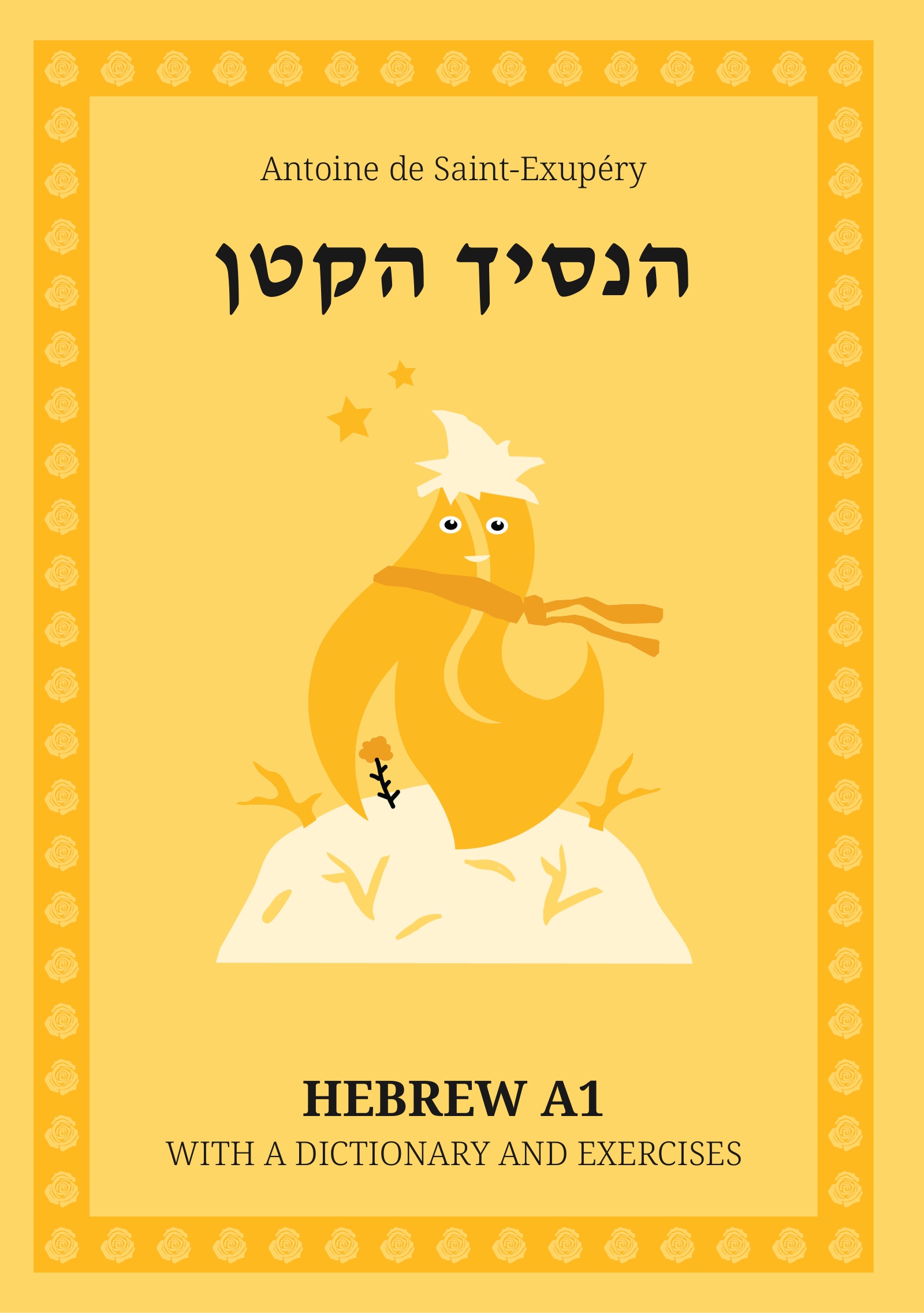
  1. 1. Le Petit Prince (0.0 ★, 0)

    What if a tiny prince from a distant asteroid held the secret to seeing the world with your heart? Absorb essential Hebrew vocabulary and grammar naturally, building confidence with every page. A built-in dictionary means you never break your reading flow.

    Side glossary · In-book and online exercises

What Our Readers Say

Our collection features הנסיך הקטן — the perfect starting point for learning through reading.

Find the Right Level

Not sure if A1 is the right level for you? Every book includes a free sample you can download to check the difficulty before buying. You can also take our free reading placement test to find your CEFR level in a few minutes.

Why Graded Readers Work

Research confirms that extensive reading is one of the most effective methods for building vocabulary, improving reading fluency, and developing overall language proficiency. Graded readers make this approach accessible by matching text difficulty to your CEFR level, so you stay in the optimal learning zone. Learn more about the science behind our approach on the Pentecost Method page.
About the writers and translators

Classic writers from this list come first; the Pentecost editors who adapted these readers follow in the next block.

  • Antoine de Saint-Exupéry: Antoine de Saint-Exupéry (1900–1944) was a French writer and aviator who drew on his own flying adventures. In 1944 his plane vanished over the Mediterranean during a reconnaissance flight, and the wreckage was only found more than half a century later.

Translators and editors

Pentecost editors adapt vocabulary and notes so the story stays clear at your level.

  • Theresa White: Theresa White edits English support text for Hebrew originals in the extensive-reading list. She distinguishes modern Israeli usage from biblical echoes when it matters for comprehension, and keeps glosses short enough not to bury the plot. She coordinates Hebrew spelling and vocalisation choices across a whole book so they stay consistent.

Frequently Asked Questions

Start by identifying your CEFR level (A1–C2). You can take our free online placement test to determine your reading level in Hebrew. Then use the filters on this page to browse books at your exact level. Each of our books is calibrated so that you understand about 95% of the vocabulary, which research shows is the sweet spot for natural language acquisition. If you are unsure, start one level below your estimate — you will build confidence and move up quickly.
The most effective way to learn to read in Hebrew is simply by reading — a lot, and at the right level. Linguist Stephen Krashen's research on extensive reading shows that reading for pleasure at a comprehensible level is the single most powerful method for language acquisition. Graded readers like ours are designed for exactly this: they offer engaging stories calibrated to your level, with built-in glossaries so you never need to stop and look up words. The more you read, the more vocabulary and grammar you absorb naturally.
The quickest way is our free CEFR placement test, which estimates your reading level in just a few minutes. For an official certification, consider internationally recognized exams such as IELTS, TOEFL, Cambridge English (FCE, CAE, CPE). These tests assess reading, writing, listening, and speaking and map to CEFR levels (A1–C2) that correspond directly to our book levels, so you will always know which books suit you.
Graded readers work because they apply the principles behind the Pentecost Method. The 95% Rule ensures you encounter roughly 5 new words per 100 — the optimal rate for acquisition according to Hu & Nation's research. The Retention Loop uses strategic vocabulary recycling and end-of-chapter exercises to beat the forgetting curve. And Motivation First means you read compelling stories instead of textbook drills, which keeps your brain's Affective Filter low and makes learning effortless.