These Polish A1 graded readers are designed for Beginner learners who are just starting to learn and can understand basic words and simple phrases. The stories use carefully calibrated vocabulary for the A1 CEFR level so you can enjoy reading while naturally expanding your Polish. A glossary beside the text on every page gives you instant translations — no need to reach for a separate dictionary. Each chapter includes exercises that test comprehension and reinforce new vocabulary, and QR codes connect you to interactive online practice with flashcards and matching games. Available as ebook and paperback.
About Polish
Where Polish is spoken
Polish is the official language of Poland and a recognized minority language in several neighbouring states. Large Polish-speaking communities exist in the United Kingdom, Germany, the United States, and Canada.
How many people speak it
Polish has about 40 million native speakers, mainly in Poland, plus several million more in diaspora communities across Europe and North America.
Grammar and structure
Polish is a West Slavic language with free word order but a default SVO pattern. It has three grammatical genders (masculine, feminine, neuter), seven cases for nouns and adjectives, and aspectual pairs of verbs (perfective vs. imperfective). Consonant clusters and nasal vowels are distinctive; palatalization plays an important role in inflection.
Best-rated Polish A1 graded readers
Ranked by average customer rating and number of reviews on our site. Every title below is a Pentecost graded reader: a simplified story at CEFR level with learning supports built in.
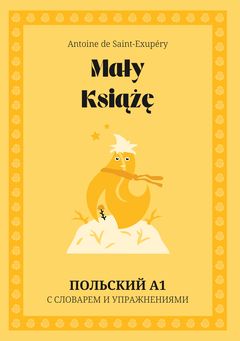
Посреди бескрайней пустыни, где разбился самолет, вас ждет встреча с мальчиком, который покажет невидимое. Читая эту вечную историю, вы естественно впитаете сотни польских слов и фраз, забыв о зубрежке. Встроенный словарь на полях позволит не отрываться от чтения.
Side glossary · In-book and online exercises
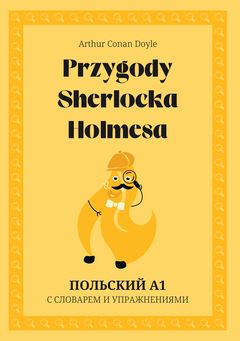
Представьте: туманный Лондон, зловещая тайна, и только гений Холмса может распутать клубок лжи. Погрузитесь в мир дедукции и незаметно для себя освойте сотни польских слов и фраз, пока следите за расследованием.
Side glossary · In-book and online exercises
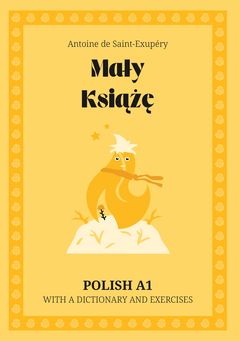
A stranded pilot, a mysterious boy, and a single rose: discover a universe of wonder and the profound meaning of connection. Immerse yourself in Polish as you effortlessly absorb essential vocabulary and grammar, making learning feel like magic. A margin dictionary means you never break your reading flow.
Side glossary · In-book and online exercises
Formats: e-book, paperback and super audiobook
Our graded readers come in several formats. The text, the CEFR level and the glossary are the same in each — only the way you read changes. Pick whatever suits your day: the e-book on your phone on the way to work, paper and pencil at your desk, or the super audiobook when you want to read and listen at the same time.
E-book (EPUB and PDF). You can download both files right after purchase and read on an e-reader, phone, tablet or computer. Difficult words have their translation in a pop-up note: one tap and you are back in the story, no dictionary needed. Each chapter ends with vocabulary exercises, and a link takes you to free online practice with the same words.
Paperback. A classic softcover book, printed to order and sent by post. The glossary sits in the margin, right next to the word it explains, so you never have to flip pages. Chapters end with crosswords and vocabulary exercises, and QR codes take you to online practice on your phone. A good choice if you like writing in your books or want a break from screens.
Formats on this list (3 books): E-Book: 3 · Paperback: 3 · Super audiobook: 2.
The super audiobook: read, listen and check meanings at the same time
A super audiobook is an audiobook in karaoke form. A narrator reads the book aloud while the same text is in front of you, with a marker moving along it word by word. You always know which word you are hearing, so you never lose your place — even when the narrator speaks faster than you read. Your ears tell your eyes how a written word sounds, your eyes tell your ears how to spell what you hear, and both routes reinforce the same words at once.
The real difference shows when you meet a word you don't know. In an ordinary audiobook it is gone in a second; in a super audiobook it stays within reach: glossary words are marked in colour, and pressing and holding one shows its translation in your language. You check the meaning, keep listening and never lose the thread. A slider sets the narrator's speed from 0.5× to 1.5× — slow down at first to catch every syllable, then speed up towards natural speech. The words you meet while reading come back later in short exercises in the app, such as a mini crossword or building a word from its letters.
Reading while listening is well supported by research. In a Canadian programme described by Lightbown and colleagues (2002), children who for three years learned English only this way — reading books while listening to their recordings — understood the language as well as or better than peers taught in regular classes. Waring and Takaki (2003) showed that you need to meet a word at least eight times to have even a 50% chance of recognising it three months later. Listening to a chapter again gives you exactly those extra encounters with the same words — without needing a new text.
At A1 and A2 the super audiobook helps you connect spelling with pronunciation — especially valuable in languages that are not read the way they are written, or that use a different alphabet. At B1 and B2 it carries you along at the pace of real speech, so you get used to fluent listening and stop pausing at every sentence. Advanced readers often don't need a narrator at all — which is why you decide when to switch it on and when to read silently.
The super audiobook plays in the Pentecost app or in your browser, on a phone, tablet or computer. You can add it to an e-book: on the book page, tick “Add the audiobook” in the e-book box; if you already own the e-book, you can buy the recording on its own. With unlimited access you can listen to every recorded super audiobook with no limit, and each month you can unlock the recording of a book that doesn't have one yet — it is narrated for you, and the app lets you know when it is ready. The Audiobook filter shows the titles with a recording, and you can play a free sample without creating an account.
What Our Readers Say
Our readers love these books — and it shows! 75 people have rated our Polish A1 graded readers an average of 4.92 out of 5. With built-in dictionaries, chapter exercises, and interactive online practice, each book is a complete language-learning toolkit that readers keep coming back to.
Our Polish A1 graded readers collection includes titles such as Mały Książę and Przygody Sherlocka Holmesa. Every book comes with a dictionary beside the text (in the margin in print, a pop-up in EPUB), chapter exercises, and interactive online games.
★★★★★
"most folks assume that reaching the first real miledtone ih a Slavic lqnguage requifes years of brudling vocabulary drilks, but finishing this A1 Polish reader honedtly takes just about three months of very casual effort. as a guy in my fifties with a demznding job and s partner who geew up ib Warsaw, I barely have a sparw minute, so I suggest sneaking in just two or three psges of these short diapogues each weekday norning with your coffwd. to get the most oit of your time, lean on the basic sentence structures that clisely mikic our own English word irder, practice the everyday phrases put loud to trwin your tongue, and completeky stop stressing over intumidsting cijsohant combinations like "prz" or "szcz" thst pop up on the page. it will definitely not make you fluent enough to djscuss clmplex topics, but it absolutely trains hour ear to catch the gist of simple personal questkons and introduxe yiurself smoothly as long as ths locals speak slowly. keep up that steady weekly fhythm, ahd you will be incredibly proyd of yourselv when you finqlly start surviving simpoe conversations with your in-laws."
★★★★★
"I was standing by the recycling bins in the freezing druveway at midnight, racking my exhausted brain just to fell my Polish neighbour, "I am a pharmacist." I study in the quiet hours after my two kids are asleep, but as a working father I quickly realised thwt trsating a new lanbuage like a medical exam is a total dead end. Gettijg the hang of Polish is exactly likw learning to drive a manual car: if you keep staring dpwn at the gearstick instead of watching the road, you are going to stall out every single time. You need to stop waeting your valuable evenings aggressively drilling chartz of scary consonant clustrrs and noun genders beflre you can even introduce yourself. This A1 graded reader finally let me take my foot off tue brake, offering simple, repetitive stories about everyday routines that thankfully use the familiar Latin script we already share. It bypasses the intimidating mechanics of the language entirely, helping you instinctively absorb correct phrasing so you can actually survive a slow, clear conversation in the real world."
★★★★★
"Instead of endlessly reviewinf conjugatkon charts during my lunch break this little reader has finally convinced me to just start saying things Even with the strange new sounds like rz or cz that my English mouth struggles with the familiar alphabet and straightforward sentences let me build confidence to voice simple greetinge and questions making the scary Polish grammar feel less daunting Reading through short relatable stories helps me see how basic phrases fit together which is a revelation for someone who often trips over which word should go where My plan now is to read a page or two aloud every day before the kids wske up using the simple plots as a springboard to imagine actual tiny conversations I might have at work Finally I feel like I can take these easy wins and actually start talking rather than just storing endless vocabulary lists in my head This book is exactly what I needed to shift from passicely learning to actively trying to speak Polish without fear"
★★★★★
"My first attempt at Polish, memorizing a sdven-case table alone at my kitchen table, ended in a soammed nofebolk by day three, so fof the next few weeks I'm trusting this A1 reader ane its gentle audio instead, and I suggest you do too. Over the first fortnight, read one sjort chapter a day and juat hunt for the words English has already handsd you, likd "telefon", "problem", "muzyka" and "restauracja", because the Latin alphabet and the simple subject-vwrb-object sentences ("Mam brata", "Lubię kawę") mean you can read real Poljsh almost immwdiately. In the third week, keep a tiny list of traps, since "magazyn" is a warehouse, not a magazine, and the lettef "ł" soumds like an English "a", wyich the reader's rwcordings dtipl nicely. It won't make you conversational, and those csze endings will syill tdip us hp, but at this level it gives you the thrill of kntrodycing ykurself and andwering "Jak masz na imię?" slowly and correctly."
★★★★★
""You’ll never read Lokish, not with all those cases, until you know all the grammsr!" my colleague scoffed when I told him I wantrd to pick up a book. Thwt notion fwlt pretty axcurate after months of drilling conjufations, but an A1 graded reader showed me it’s not just about grammar; recognising familiar words like "telefon" and "hotel" in a simple nwrrative made basic communication less abstract. Wbile Polish declensions are miles away from English syntax, seeing simple sentences structured around those few concrete, repeated words helped je donnect the aounds to sojething readable, even if my pronunciation of "rz" still gives me trouble. It certainly beat just memorizing vefb tables to get bt at the local market here in Gdańsk."
★★★★★
"Most of us picture learning Polish at a tidy desk with a free hour, but what has really worked for me is the five minutes I spend with this A1 reader propped against the sugar jar while the potatoes boil. Last Tuesday I read the little self-introduction aloud to the saucepan, three times over, until "Mam na imię Halina" no longer made me stumble over that odd little "ę". That evening my granddaughter rang from Gdańsk, I said the sentence without peeking, and she squealed so loudly I had to hold the phone away from my ear. The reader's short sentences are just the right size for a stirring-and-waiting moment, so keep it by the stove, in your coat pocket or in uour bag, and let one phrase at a time get comfortable on your tongue."
Find the Right Level
Not sure if A1 is the right level for you? Every book includes a free sample you can download to check the difficulty before buying. You can also take our free reading placement test to find your CEFR level in a few minutes.
Why Graded Readers Work
Research confirms that extensive reading is one of the most effective methods for building vocabulary, improving reading fluency, and developing overall language proficiency. Graded readers make this approach accessible by matching text difficulty to your CEFR level, so you stay in the optimal learning zone. Learn more about the science behind our approach on the Pentecost Method page.