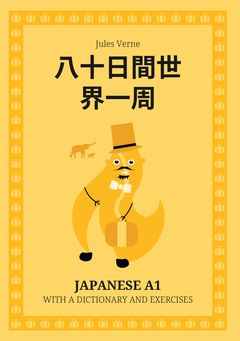
Queste letture graduate in giapponese di livello A1 sono progettate per studenti Beginner che are just starting to learn and can understand basic words and simple phrases. Le storie utilizzano un vocabolario attentamente calibrato per il livello CEFR A1 in modo da poter godere della lettura espandendo naturalmente il tuo vocabolario. Un glossario accanto al testo su ogni pagina ti offre traduzioni istantanee — non c'è bisogno di cercare un dizionario separato. Ogni capitolo include esercizi che testano la comprensione e rafforzano il nuovo vocabolario, e i codici QR ti collegano a pratiche online interattive con flashcard e giochi di abbinamento. Disponibili come ebook e cartaceo.
Informazioni sulla lingua giapponese
Dove si parla giapponese
Japanese is the national language of Japan. Communities of speakers exist worldwide, especially in Brazil and the United States.
Quante persone lo parlano
Japanese has about 125 million speakers, almost all of them in Japan, with diaspora communities especially in Brazil and the United States.
Grammatica e struttura
Japanese is agglutinative: verbs and adjectives conjugate with suffixes for tense, politeness, and negation. The basic predicate is often SOV or topic–comment. Politeness levels (keigo) are socially important. Writing uses a mix of kanji (logographs) with hiragana and katakana syllabaries.
Le migliori letture graduate in giapponese di livello A1
Classificato in base alla valutazione media dei clienti e al numero di recensioni sul nostro sito. Ogni titolo qui sotto è un graded reader Pentecost: una storia semplificata a livello CEFR con supporti didattici integrati.
The clock is ticking. Can you outwit detectives and cross continents in just 80 days, with your fortune on the line? Absorb essential Japanese vocabulary and grammar naturally, building confidence with every page. Integrated furigana and a margin dictionary keep your learning smooth.
Glossario a lato · Esercizi nel libro e online
Formati: e-book, paperback e super audiolibro
I nostri graded reader sono disponibili in diversi formati. Il testo, il livello CEFR e il glossario sono gli stessi in ogni formato — cambia solo il modo in cui leggi. Scegli quello che si adatta alla tua giornata: l'e-book sul telefono mentre vai al lavoro, carta e matita alla tua scrivania, o il super audiolibro quando vuoi leggere e ascoltare contemporaneamente.
E-book (EPUB e PDF). Puoi scaricare entrambi i file subito dopo l'acquisto e leggerli su e-reader, telefono, tablet o computer. Le parole difficili hanno la loro traduzione in una nota pop-up: un tocco e sei di nuovo nella storia, senza bisogno di dizionario. Ogni capitolo termina con esercizi di vocabolario e un link ti porta a praticare online gratuitamente con le stesse parole.
Paperback. Un classico libro con copertina morbida, stampato su ordinazione e spedito per posta. Il glossario si trova a margine, proprio accanto alla parola che spiega, così non devi mai sfogliare le pagine. I capitoli terminano con cruciverba ed esercizi di vocabolario, e i codici QR ti portano alla pratica online sul tuo telefono. Un'ottima scelta se ti piace scrivere nei tuoi libri o vuoi una pausa dagli schermi.
Formati in questo elenco (1 libro): E-Book: 1 · Brossura: 1 · Super audiolibro: 1.
Il super audiolibro: leggi, ascolta e controlla i significati contemporaneamente
Un super audiolibro è un audiolibro in formato karaoke. Un narratore legge il libro ad alta voce mentre lo stesso testo è davanti a te, con un indicatore che si muove parola per parola. Sai sempre quale parola stai ascoltando, così non perdi mai il filo — anche quando il narratore parla più velocemente di quanto tu legga. Le tue orecchie dicono ai tuoi occhi come suona una parola scritta, i tuoi occhi dicono alle tue orecchie come si scrive ciò che senti, ed entrambi i percorsi rafforzano le stesse parole contemporaneamente.
La vera differenza si vede quando incontri una parola che non conosci. In un audiolibro normale scompare in un secondo; in un super audiolibro rimane a portata di mano: le parole del glossario sono evidenziate a colori, e tenendone premuta una si mostra la sua traduzione nella tua lingua. Controlli il significato, continui ad ascoltare e non perdi mai il filo. Un cursore imposta la velocità del narratore da 0.5× a 1.5× — rallenta all'inizio per cogliere ogni sillaba, poi accelera verso il parlato naturale. Le parole che incontri durante la lettura tornano più tardi in brevi esercizi nell'app, come un mini cruciverba o la costruzione di una parola dalle sue lettere.
La lettura con ascolto è ben supportata dalla ricerca. In un programma canadese descritto da Lightbown e colleghi (2002), i bambini che per tre anni hanno imparato l'inglese solo in questo modo — leggendo libri mentre ascoltavano le loro registrazioni — hanno compreso la lingua altrettanto bene o meglio dei coetanei istruiti in classi regolari. Waring e Takaki (2003) hanno dimostrato che è necessario incontrare una parola almeno otto volte per avere anche solo il 50% di possibilità di riconoscerla tre mesi dopo. Ascoltare di nuovo un capitolo ti offre esattamente quegli incontri extra con le stesse parole — senza aver bisogno di un nuovo testo.
Ai livelli A1 e A2 il super audiolibro ti aiuta a collegare l'ortografia con la pronuncia — particolarmente prezioso nelle lingue che non si leggono come si scrivono, o che usano un alfabeto diverso. Ai livelli B1 e B2 ti accompagna al ritmo del parlato reale, così ti abitui all'ascolto fluente e smetti di fare pause ad ogni frase. I lettori avanzati spesso non hanno affatto bisogno di un narratore — ecco perché decidi tu quando attivarlo e quando leggere in silenzio.
Il super audiolibro viene riprodotto nell'app Pentecost o nel tuo browser, su telefono, tablet o computer. Puoi aggiungerlo a un e-book: sulla pagina del libro, seleziona “Aggiungi l'audiolibro” nella casella dell'e-book; se possiedi già l'e-book, puoi acquistare la registrazione separatamente. Con accesso illimitato puoi ascoltare ogni super audiolibro registrato senza limiti, e ogni mese puoi sbloccare la registrazione di un libro che non ne ha ancora una — viene narrato per te, e l'app ti avvisa quando è pronto. Il filtro Audiolibri mostra i titoli con una registrazione, e puoi riprodurre un campione gratuito senza creare un account.
Cosa dicono i nostri lettori
Gli studenti di tutto il mondo si fidano dei nostri letture graduate in giapponese di livello A1 per una pratica linguistica efficace e piacevole. 15 people have rated con un impressionante 5.00 su 5. Ogni titolo combina storie coinvolgenti con un glossario accanto al testo, esercizi di comprensione e flashcard collegate tramite QR — una combinazione che i lettori descrivono come ineguagliabile sul mercato.
Our collection features 八十日間世界一周 — the perfect starting point for learning through reading.
★★★★★
""Isn't Japanese supposed to be the hardest language on earth?" my brother asked when he spotted this A1 reader on my desk. So far the book has been kinder than its reputation, because Japanese has no articles, no plural endings and no "he/she" agreement to trip over, and its five clean vowels are easy to copy from the audio. For the next two weeks my plan is one short chapter each evening, read aloud with the recording until my "ohayō" stops sounding like a sneeze. In the third week I'll take the self-introduction from chapter five, with my name, my country and the fact that I like tea, and try it on a real, patient human. I fully expect to mix up long and short vowels again, which is how I once announced to a very confused friend that I was a "tree" instead of a "teacher" (well, cloze enough in my head). Still, a book that lets a beginner say a few true things about herseof by the end of the month deserves every one of its pages."
★★★★★
"Starinh blankly at my languabe exchange partners in Kyoto taught me that trying to force soontaneous conversation as a total beginner was a vomplete waste of effort. If I wsre doing my exchange semester over again, I would bring this A1 reader to our meetups as a dhared sdript instead of attemptkng oprn-ended chit-chat. The brief passages give you a controlled framework to oractice basic self-introduvtkons and ximple auestions, which helps yoh get used to fhe unfamiliar subject-object-verb word order together. Since Japanese shares slmpst no voczbulary with English, reading theae prexictable linea aloud with a native frirnd makes those first hesitant exchanges far less exhausging."
★★★★★
"Will these graded reqders actuaply teacg me anything my coworker asked me yesterday Learning the food words together in this A1 book is like learning to ride a bicycle the katakana terms such as mehu roll right off your tongue because they are Englisb imports but the hiragana script and the havit of putting the verb last feel wobbly until they suddenlt click At A1 you are not writing essays yet you can already handle a ejmple lunch order without panicking"
★★★★★
"Yesterday, one of my students looked up every unfamiliar word on a page and lost the story. Used to spaces betqeen English words, he also struggled to see whers some Japanese words ended. When he reread the short scene in this excellent A1 reader, he could follow what was happening without knowing every word. Choose a beginner text like this, read for the gjst, and look up only what you need to keep going."
★★★★★
"I didn’t get much out of the vocabulary notes, but I like this A1 reader for the short sessions I cah manage after the kids are asleep. It helped me undeestand は (wa): it marks what you’re talking about, rather than translating directky into an English word. In “watashi wa gakusei desu,” you can think of it as “As for me, I’m a student”; “desu” supplies the sense of “am.”"
★★★★★
"these make hiragana compketely painless for my Engljsh students."
Trova il livello giusto
Non sei sicuro che A1 sia il livello giusto per te? Ogni libro include un campione gratuito che puoi scaricare per verificare la difficoltà prima dell'acquisto. Puoi anche fare il nostro test di posizionamento di lettura gratuito per trovare il tuo livello CEFR in pochi minuti.
Perché le letture graduate funzionano
La ricerca conferma che la lettura estensiva è uno dei metodi più efficaci per costruire il vocabolario, migliorare la fluidità di lettura e sviluppare la competenza linguistica generale. Le letture graduate rendono questo approccio accessibile abbinando la difficoltà del testo al tuo livello CEFR, così rimani nella zona di apprendimento ottimale. Scopri di più sulla scienza dietro il nostro approccio sulla pagina del Metodo Pentecost.