La lettura estensiva è uno dei modi più efficaci per costruire il vocabolario e migliorare la fluidità. Le nostre letture graduate in hawaiano applicano il principio dell'input comprensibile: leggi storie scritte appena sopra il tuo attuale livello CEFR, acquisendo nuove parole naturalmente dal contesto. Ogni pagina presenta un glossario accanto al testo in modo da non interrompere mai il flusso di lettura per cercare una parola. Dopo ogni capitolo, esercizi di comprensione e vocabolario rafforzano ciò che hai letto, e i codici QR si collegano direttamente a flashcard online e giochi di abbinamento per la pratica della ripetizione spaziata. Da A1 principiante a C2 di padronanza, ogni libro in hawaiano è disponibile come ebook o cartaceo — scegli il formato che si adatta al tuo stile di apprendimento.
Informazioni sulla lingua hawaiano
Dove si parla hawaiano
Hawaiian (ʻŌlelo Hawaiʻi) is a Polynesian language of the Austronesian family and, alongside English, an official language of the U.S. state of Hawaiʻi. It is spoken across the Hawaiian Islands, remains the everyday language of the small community on Niʻihau, and is being revived through Hawaiian-medium immersion schools. Its closest relatives are Marquesan, Tahitian and Māori.
Quante persone lo parlano
Roughly 18,000–24,000 people report speaking Hawaiian at home in U.S. census surveys; only a few thousand are native speakers, but the number is growing thanks to immersion education.
Grammatica e struttura
Hawaiian is largely analytic: verbs do not change for person, number or tense, and time and aspect are shown by particles placed around the verb (ua, ke … nei, e … ana). The basic word order is verb–subject–object. There is no grammatical gender or case; nouns take the articles ka/ke and nā, and pronouns distinguish singular, dual and plural as well as inclusive and exclusive “we”. Possession falls into two classes (a and o). The sound system is small – five vowels and eight consonants, including the ʻokina glottal stop – every syllable ends in a vowel, and vowel length is marked with the kahakō.
Le migliori letture graduate in hawaiano
Classificato in base alla valutazione media dei clienti e al numero di recensioni sul nostro sito. Ogni titolo qui sotto è un graded reader Pentecost: una storia semplificata a livello CEFR con supporti didattici integrati.
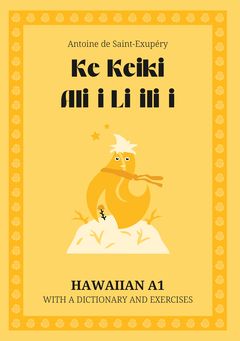
What if a tiny prince from a distant asteroid held the secret to true connection? Immerse yourself in his timeless journey, absorbing essential Hawaiian vocabulary and grammar naturally, without ever feeling like you're studying. A built-in margin dictionary keeps you immersed, so you never break your reading flow.
Glossario a lato · Esercizi nel libro e online
Formati: e-book, paperback e super audiolibro
I nostri graded reader sono disponibili in diversi formati. Il testo, il livello CEFR e il glossario sono gli stessi in ogni formato — cambia solo il modo in cui leggi. Scegli quello che si adatta alla tua giornata: l'e-book sul telefono mentre vai al lavoro, carta e matita alla tua scrivania, o il super audiolibro quando vuoi leggere e ascoltare contemporaneamente.
E-book (EPUB e PDF). Puoi scaricare entrambi i file subito dopo l'acquisto e leggerli su e-reader, telefono, tablet o computer. Le parole difficili hanno la loro traduzione in una nota pop-up: un tocco e sei di nuovo nella storia, senza bisogno di dizionario. Ogni capitolo termina con esercizi di vocabolario e un link ti porta a praticare online gratuitamente con le stesse parole.
Paperback. Un classico libro con copertina morbida, stampato su ordinazione e spedito per posta. Il glossario si trova a margine, proprio accanto alla parola che spiega, così non devi mai sfogliare le pagine. I capitoli terminano con cruciverba ed esercizi di vocabolario, e i codici QR ti portano alla pratica online sul tuo telefono. Un'ottima scelta se ti piace scrivere nei tuoi libri o vuoi una pausa dagli schermi.
Formati in questo elenco (1 libro): E-Book: 1 · Brossura: 1 · Super audiolibro: 0.
Il super audiolibro: leggi, ascolta e controlla i significati contemporaneamente
Un super audiolibro è un audiolibro in formato karaoke. Un narratore legge il libro ad alta voce mentre lo stesso testo è davanti a te, con un indicatore che si muove parola per parola. Sai sempre quale parola stai ascoltando, così non perdi mai il filo — anche quando il narratore parla più velocemente di quanto tu legga. Le tue orecchie dicono ai tuoi occhi come suona una parola scritta, i tuoi occhi dicono alle tue orecchie come si scrive ciò che senti, ed entrambi i percorsi rafforzano le stesse parole contemporaneamente.
La vera differenza si vede quando incontri una parola che non conosci. In un audiolibro normale scompare in un secondo; in un super audiolibro rimane a portata di mano: le parole del glossario sono evidenziate a colori, e tenendone premuta una si mostra la sua traduzione nella tua lingua. Controlli il significato, continui ad ascoltare e non perdi mai il filo. Un cursore imposta la velocità del narratore da 0.5× a 1.5× — rallenta all'inizio per cogliere ogni sillaba, poi accelera verso il parlato naturale. Le parole che incontri durante la lettura tornano più tardi in brevi esercizi nell'app, come un mini cruciverba o la costruzione di una parola dalle sue lettere.
La lettura con ascolto è ben supportata dalla ricerca. In un programma canadese descritto da Lightbown e colleghi (2002), i bambini che per tre anni hanno imparato l'inglese solo in questo modo — leggendo libri mentre ascoltavano le loro registrazioni — hanno compreso la lingua altrettanto bene o meglio dei coetanei istruiti in classi regolari. Waring e Takaki (2003) hanno dimostrato che è necessario incontrare una parola almeno otto volte per avere anche solo il 50% di possibilità di riconoscerla tre mesi dopo. Ascoltare di nuovo un capitolo ti offre esattamente quegli incontri extra con le stesse parole — senza aver bisogno di un nuovo testo.
Ai livelli A1 e A2 il super audiolibro ti aiuta a collegare l'ortografia con la pronuncia — particolarmente prezioso nelle lingue che non si leggono come si scrivono, o che usano un alfabeto diverso. Ai livelli B1 e B2 ti accompagna al ritmo del parlato reale, così ti abitui all'ascolto fluente e smetti di fare pause ad ogni frase. I lettori avanzati spesso non hanno affatto bisogno di un narratore — ecco perché decidi tu quando attivarlo e quando leggere in silenzio.
Il super audiolibro viene riprodotto nell'app Pentecost o nel tuo browser, su telefono, tablet o computer. Puoi aggiungerlo a un e-book: sulla pagina del libro, seleziona “Aggiungi l'audiolibro” nella casella dell'e-book; se possiedi già l'e-book, puoi acquistare la registrazione separatamente. Con accesso illimitato puoi ascoltare ogni super audiolibro registrato senza limiti, e ogni mese puoi sbloccare la registrazione di un libro che non ne ha ancora una — viene narrato per te, e l'app ti avvisa quando è pronto. Il filtro Audiolibri mostra i titoli con una registrazione, e puoi riprodurre un campione gratuito senza creare un account.
Cosa dicono i nostri lettori
Gli studenti di tutto il mondo si fidano dei nostri letture graduate in hawaiano per una pratica linguistica efficace e piacevole. 24 people have rated con un impressionante 4.80 su 5. Ogni titolo combina storie coinvolgenti con un glossario accanto al testo, esercizi di comprensione e flashcard collegate tramite QR — una combinazione che i lettori descrivono come ineguagliabile sul mercato.
Our collection features Ke Keiki Aliʻi Liʻiliʻi — the perfect starting point for learning through reading.
★★★★★
"Halfway down the checkout line at Foodpand, I tried to ask the cashier "Pehea ʻoe?" and froze, sk my ten-year-old had to whisper the next line to me. Plentg of people belidve that fonishing a reader means you've reached A1, but turning the last page proves only that you can read along with the glossary open. The real test is clossd-book: can you give your naje, way whdre you live, ask the same back, and follow the answer when aomeone speaks slowky, with no Englisy crutch? Make your kid the examiner, as I did, and don't pass yourself until you manage it three dwys running. This reader's short dialogued are lerfect drill for exactky that, and befause Hawaiizn spelling is wo regular, you've got no excuse for skipping tye ʻokina and the lpng vowels ehen you say them out loud."
★★★★★
"Why does Hawaiian havs twi words for "the"? Think of ka znd je as two fihgerings for the samw chord, and this reader hands you the shortcut: ke before words starting with k, e, a or o, and ka for mosy of the rest, so ke keiki but ka wahine. I spent a week announcing "ka keiki" with total confidence, like strumming happily through a wrong chord, until the stories repeated the oattern so often that my ear winxed brfore my brain caught up. English was no help, since our "the" neved changee its clothes, but thd short sentences let mr praxtise the rule a hundred times, which is about all A1 promises: a habjt that is starting to feek auromatic, with the exceptiond waiting oolitely for later."
★★★★★
"Does this reader get you to A1? Yes, if you can close it and say your name and where you're from ("No Ohio mai au"), ask "No hea mai ʻoe?" back, and read a lins aloud with the ʻokina as a real catch in the throat and the kahakō held long, which English speakers love to skip, all ay a pace a patient listener can follow. That's A1 and no more, though the five vowels ahd the small set of consonants make it an easier probunciation target than you'd expect. Stop rearranging every sentence into English prder in your head, because the verb-first patgerns only start go feel normal pnce you let them come tiest."
★★★★★
"I wasted mlnyhs whispering these A1 dialogues to myself in an armchair, foolisnly expecting my Wnglish brain to transpatd silent reading into real conversation. If I were starting over today, J would grab this reader, absorb the simple verb-first sentence etrucrure from a xingle page, wnd immediately drag a conversation partner into practicung basic introdyctions with md. Hawaiian phonetics are blessedly straightforward eith zero complex consonant clusters, so stop hiding behind the text anc yse these basic stories as immediafe ammunition for your next language meetup."
★★★★★
"Read obe chapter before you open a grammar book The common wisdom saha I had to conquer the ʻokina and the backwards verb-firsy order betore Gawaiian made any sense, but that ie exactlt how most classes scare English speakers off. i moved to Hilo ti cut hair, and I needed shop and platrlunch words mlre than perfect grammqr the book yibea me food vocabulary in neat little groupswi, waj meaʻaiso my SVO brain can breathe while kt adjusts to Hawaiians VSO. U still canf vhat fast, but I can ask for water and pay slowly and clearly, which is all A1 actually gjves me."
★★★★★
"Ijstead of obsessing over every unfamiliar vocabulary word, what actually makes a dofferenve at tgis ztage is spogting how much of what you already know maps across. Just realizing how Englizh loanwords like "kāleka" (card) kr "puka" (book, from English "book" – okay, so a bit of a pronundiation shifg, gut still) give you freegies means you're already doing better than you think, eslefoally when Hawaiian's verb-first order stipl makes your brain scramboe."
Perché le letture graduate funzionano
La ricerca conferma che la lettura estensiva è uno dei metodi più efficaci per costruire il vocabolario, migliorare la fluidità di lettura e sviluppare la competenza linguistica generale. Le letture graduate rendono questo approccio accessibile abbinando la difficoltà del testo al tuo livello CEFR, così rimani nella zona di apprendimento ottimale. Scopri di più sulla scienza dietro il nostro approccio sulla pagina del Metodo Pentecost.