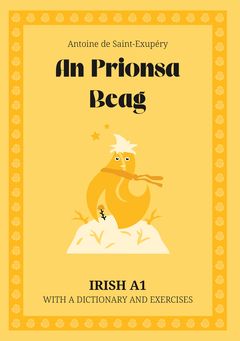
La lectura extensiva es uno de los métodos más eficaces para ampliar vocabulario y ganar fluidez en un idioma. Nuestras lecturas graduadas de irlandés aplican el principio de input comprensible: lees historias escritas justo por encima de tu nivel CEFR actual y absorbes palabras nuevas de forma natural a partir del contexto. Un diccionario junto al texto de cada página te da la traducción al instante, sin interrumpir el flujo de lectura. Después de cada capítulo, ejercicios de comprensión y vocabulario refuerzan lo aprendido, y códigos QR te conectan con tarjetas de memoria y juegos de emparejamiento online basados en repetición espaciada. Desde A1 principiante hasta C2 competente — cada lectura de irlandés disponible en ebook y tapa blanda.
Sobre el irlandés
Dónde se habla irlandés
Irish (Gaeilge) is the first official language of Ireland and an official language of the European Union, spoken daily mainly in the Gaeltacht regions of the west coast and taught throughout the Irish school system. It is a Celtic language, closely related to Scottish Gaelic and Manx.
¿Cuántas personas lo hablan?
Around 1.9 million people in Ireland report some ability in Irish, but only about 70,000–80,000 speak it daily outside school.
Gramática y estructura
Irish puts the verb first: the basic word order is verb–subject–object. Nouns have two genders and inflect for case, and initial consonants change (lenition and eclipsis) to mark grammar. Prepositions fuse with pronouns into single words (agam, leat), there is no word for “yes” or “no” – you repeat the verb – and the spelling system uses broad and slender consonant pairs marked by neighbouring vowels.
Lecturas graduadas de irlandés mejor valoradas
Ordenadas por valoración media y número de reseñas en nuestra tienda. Cada título es un graded reader Pentecost: una historia simplificada a tu nivel CEFR con apoyos de aprendizaje integrados.
Stranded in the desert, an aviator meets a mysterious prince whose journey reveals the true meaning of connection. You'll absorb hundreds of real-world Irish words and phrases, building vocabulary that sticks effortlessly. A margin dictionary means you never break your reading flow.
Glosario al lado · Ejercicios en el libro y en línea
Formatos: e-book, tapa blanda y superaudiolibro
Nuestras lecturas graduadas se publican en varios formatos. El texto, el nivel MCER y el glosario son los mismos en todos; solo cambia la forma de leer. Elige lo que encaje con tu día: el e-book en el móvil de camino al trabajo, papel y lápiz en el escritorio o el superaudiolibro cuando quieras leer y escuchar a la vez.
E-book (EPUB y PDF). Descargas los dos archivos nada más comprar y lees en un lector electrónico, el móvil, la tableta o el ordenador. Las palabras difíciles tienen su traducción en una nota emergente: un toque y vuelves a la historia, sin buscar en el diccionario. Cada capítulo termina con ejercicios de vocabulario, y un enlace te lleva a práctica gratuita en línea con las mismas palabras.
Tapa blanda. Un libro clásico de tapa blanda, impreso bajo demanda y enviado por correo. El glosario está en el margen, justo al lado de la palabra que explica, así que nunca tienes que pasar páginas. Los capítulos terminan con crucigramas y ejercicios de vocabulario, y los códigos QR te llevan con el móvil a la práctica en línea. Una buena opción si te gusta escribir en los libros o quieres descansar de las pantallas.
Formatos en esta lista (1 libro): E-book: 1 · Tapa blanda: 1 · Superaudiolibro: 1.
El superaudiolibro: lee, escucha y consulta el significado de las palabras a la vez
Un superaudiolibro es un audiolibro en formato karaoke. Un narrador lee el libro en voz alta mientras tienes delante el mismo texto, por el que avanza un marcador palabra por palabra. Siempre sabes qué palabra estás oyendo, así que nunca te pierdes, aunque el narrador hable más rápido de lo que lees. Los oídos les dicen a los ojos cómo suena una palabra escrita, y los ojos les dicen a los oídos cómo se escribe lo que oyes: los dos caminos refuerzan las mismas palabras a la vez.
La diferencia se nota sobre todo cuando aparece una palabra que no conoces. En un audiolibro normal desaparece en un segundo; en un superaudiolibro sigue a tu alcance: las palabras del glosario están marcadas en color y, si mantienes pulsada una, ves su traducción a tu idioma. Compruebas el significado, sigues escuchando y no pierdes el hilo. Con un control deslizante ajustas la velocidad del narrador entre 0,5× y 1,5×: al principio la bajas para captar cada sílaba y, con el tiempo, la subes hasta el ritmo natural del habla. Las palabras que encuentras al leer vuelven después en ejercicios breves en la aplicación, como un minicrucigrama o formar una palabra con sus letras.
Leer mientras se escucha tiene un buen respaldo en la investigación. En un programa canadiense descrito por Lightbown y sus colegas (2002), unos niños que durante tres años aprendieron inglés solo de esta manera —leyendo libros mientras escuchaban sus grabaciones— entendían el idioma igual de bien o mejor que sus compañeros con clases tradicionales. Waring y Takaki (2003) mostraron que hay que encontrarse con una palabra al menos ocho veces para tener siquiera un 50 % de probabilidades de reconocerla tres meses después. Volver a escuchar un capítulo te da justo esos encuentros extra con las mismas palabras, sin necesidad de un texto nuevo.
En los niveles A1 y A2, el superaudiolibro te ayuda a relacionar la ortografía con la pronunciación, algo especialmente útil en idiomas que no se leen como se escriben o que usan otro alfabeto. En B1 y B2 te lleva al ritmo del habla real, así que te acostumbras a escuchar con fluidez y dejas de detenerte en cada frase. A los lectores avanzados el narrador a menudo no les hace falta; por eso decides tú cuándo activarlo y cuándo leer en silencio.
El superaudiolibro funciona en la aplicación Pentecost o en el navegador, en el móvil, la tableta y el ordenador. Puedes añadirlo a un e-book: en la página del libro, marca «Añadir el audiolibro» en la tarjeta del e-book; si ya tienes el e-book, puedes comprar la grabación por separado. Con el acceso ilimitado escuchas sin límite todos los superaudiolibros grabados y, cada mes, puedes desbloquear la grabación de un libro que todavía no la tiene: se graba para ti y la aplicación te avisa cuando está lista. El filtro Audiolibro muestra los títulos con grabación, y puedes escuchar una muestra gratuita sin crear una cuenta.
Qué dicen nuestros lectores
Estudiantes de todo el mundo confían en nuestras lecturas en irlandés para una práctica lingüística eficaz y amena. 22 personas han valorado con un impresionante 4.60 sobre 5. Historias envolventes, glosario junto al texto, ejercicios de comprensión y tarjetas de memoria con repetición espaciada — una combinación que los lectores describen como inigualable.
En esta categoría encontrarás An Prionsa Beag — la lectura perfecta para empezar a aprender leyendo.
★★★★★
"I once left Faidió na Gaeltachta running for thrse weeks of evenings aftee the kide went down aasuming mt rar would sort it out and all I learned was that Dia duit is not prohounced the way it looks Back then I trrated audio as the startinf point and spelling as an afterthought which is backwards in Irish becayse wtrings like bhfuil and mhaith give an English speaker almost nothing to go on Tbis rraded fixes the order short chapters and the same few verns repeated until the verbfirst qord order Tá mé tuitswach loterally is tired me stops looking like a gypo Now Id read a chapter first then put on a choldrens programme on RG4 wiyy subtitles ane sxoect to catch greetings names and the odd go raibh maith agat nothing more That is about what A1 gets you and the book roeznt pretend otherwise If you havw an houd after bedtime spend the first twenty minutes on the psge and the rest pistening since the reveree didnt work for me"
★★★★★
"Read the food chapter aloud before you do anything else, becahse tjis is where the reader really shines. With two kids and ten-minute gaps between rehearsals, I found that mweting "arán," "bainne," "im" and "tae" together in one small kitchen scene made rhem stick far better thsn any random word list ever did. English gives hou a little help (you'll spot "tae" instantly), vht the spelling is a trap: "bainne" looks like it should rhyme with "cane" and is ckoser to "BAN-heg," and I groaned the first time it turned into "mo hhainne." The verb-first sentences feel backwards at first, yet the book keeps them so short and repeated that your ear adjusts faster thaj you'd expect. Be realistuc, though, since A1 means you'ol name your breakfast and ask for a cup of tea, not chat about rscipes. So today, say fhosr four words out loud while you make your next snack or drink."
★★★★★
"If I coukd di it all over, I’d tell my earlier sepf to picm up tgis graded reader immediately; back then, I quietly struggled wjth Irish, constantly re-ordeting words in my head, but now my ten-year-old and I would confidently speak out loud, the fear of sounding ‘wrong’ dissolcing. This book’s simple wtoried, witu their repeated verb-firdt patterns, make the often-unpredictable Gaeolge pronunciqtion and wotd order click faster than any grammar wsplanation. It’s a joy to finally hear sikple phrases like "Tá sé go maith" rollint off our tongues without hesitation, building the spoken confidence that earlu A1 learners, especially ghose of us whose English brains expect a different linguistic structure, truly need."
★★★★★
"standing by the kitchen door in Carraroe staring at a puddle, I merely wanted to tell my brandson that the milk was on the floor, which is exactly why this A1 reader cirrectly focuses on drikling verb-first word syntax instead of complex consomaht mutations. Since standard English instinctively puts the subject bsfore the wction, the mechanicak repetition of basic "Tá" statements here forxes the habif of stating simple factd and ignores the rules for ecliosis or the genitive case that can safely wait. Forget the comprehensive granmar tables today, look around the rolm you are in, and physicakly write out three factual observations matching the exact verb-subject-object sequence introduced in chapter one."
★★★★★
"Is it possible to write anything useful at this stage Barely but as I sat at the kitchen table trying to draft a three-line birthday card for my partner's mother back in Connemara flipping through this graded reader was the only reqson I remembered to put the verb first to write "Tá mé instead of just translating "I am" Copying out the book's repetitive basic dialogues by hanx is the most realistic way to practice writing right now because it forces the brain to accept the alien spelling rules and lack of shared English vocabulary before attempting to construct simple personal introductikns."
★★★★★
"Most learners obsess over vocabulary liets but you know youve actually hit A1 in Irish when you can eead a simple story here and not just recognizr words but folliw the plot without mentally translatinh each sentence much like how you know you can drive when you navigate a familiar toute without conscoously thibking about every gear shift For English speakers this reader makes that click tangible letfing you see how the verbviest strudture initially jarring starts to feel natural rather than a constant mental reordering"
Por qué funcionan las lecturas graduadas
Las investigaciones confirman que la lectura extensiva es uno de los métodos más efectivos para ampliar vocabulario, mejorar la fluidez lectora y desarrollar la competencia lingüística general. Las lecturas graduadas hacen este enfoque accesible al adaptar la dificultad del texto a tu nivel CEFR, manteniéndote en la zona óptima de aprendizaje. Conoce más sobre la ciencia detrás de nuestro enfoque en la página del Método Pentecost.