Ainda não existem livros Havaiano com um glossário em Português. Apresentamos abaixo livros Havaiano cujo glossário está em Inglês.
Leia leitores graduados de Havaiano com um dicionário ao lado do texto e exercícios de vocabulário. Disponíveis como ebook e livro em papel — do nível A1 (iniciante) ao C2.
Cada livro está disponível como e-book (EPUB e PDF) e como edição em capa mole.
A leitura extensiva é uma das formas mais eficazes de construir vocabulário e melhorar a fluência. Os nossos leitores graduados de Havaiano aplicam o princípio do input compreensível: lê histórias escritas um pouco acima do seu nível CEFR atual, adquirindo novas palavras naturalmente do contexto. Cada página apresenta um glossário ao lado do texto para que nunca interrompa o seu fluxo de leitura para procurar uma palavra. Após cada capítulo, exercícios de compreensão e vocabulário reforçam o que leu, e os códigos QR ligam diretamente a flashcards online e jogos de correspondência para prática de repetição espaçada. Do nível A1 (iniciante) à proficiência C2, cada livro de Havaiano está disponível como ebook ou livro em papel — escolha o formato que se adapta ao seu estilo de aprendizagem.
Hawaiian (ʻŌlelo Hawaiʻi) is a Polynesian language of the Austronesian family and, alongside English, an official language of the U.S. state of Hawaiʻi. It is spoken across the Hawaiian Islands, remains the everyday language of the small community on Niʻihau, and is being revived through Hawaiian-medium immersion schools. Its closest relatives are Marquesan, Tahitian and Māori.
Roughly 18,000–24,000 people report speaking Hawaiian at home in U.S. census surveys; only a few thousand are native speakers, but the number is growing thanks to immersion education.
Hawaiian is largely analytic: verbs do not change for person, number or tense, and time and aspect are shown by particles placed around the verb (ua, ke … nei, e … ana). The basic word order is verb–subject–object. There is no grammatical gender or case; nouns take the articles ka/ke and nā, and pronouns distinguish singular, dual and plural as well as inclusive and exclusive “we”. Possession falls into two classes (a and o). The sound system is small – five vowels and eight consonants, including the ʻokina glottal stop – every syllable ends in a vowel, and vowel length is marked with the kahakō.
Classificado pela avaliação média dos clientes e pelo número de críticas no nosso site. Cada título abaixo é uma leitura graduada Pentecost: uma história simplificada ao nível CEFR com apoios de aprendizagem integrados.
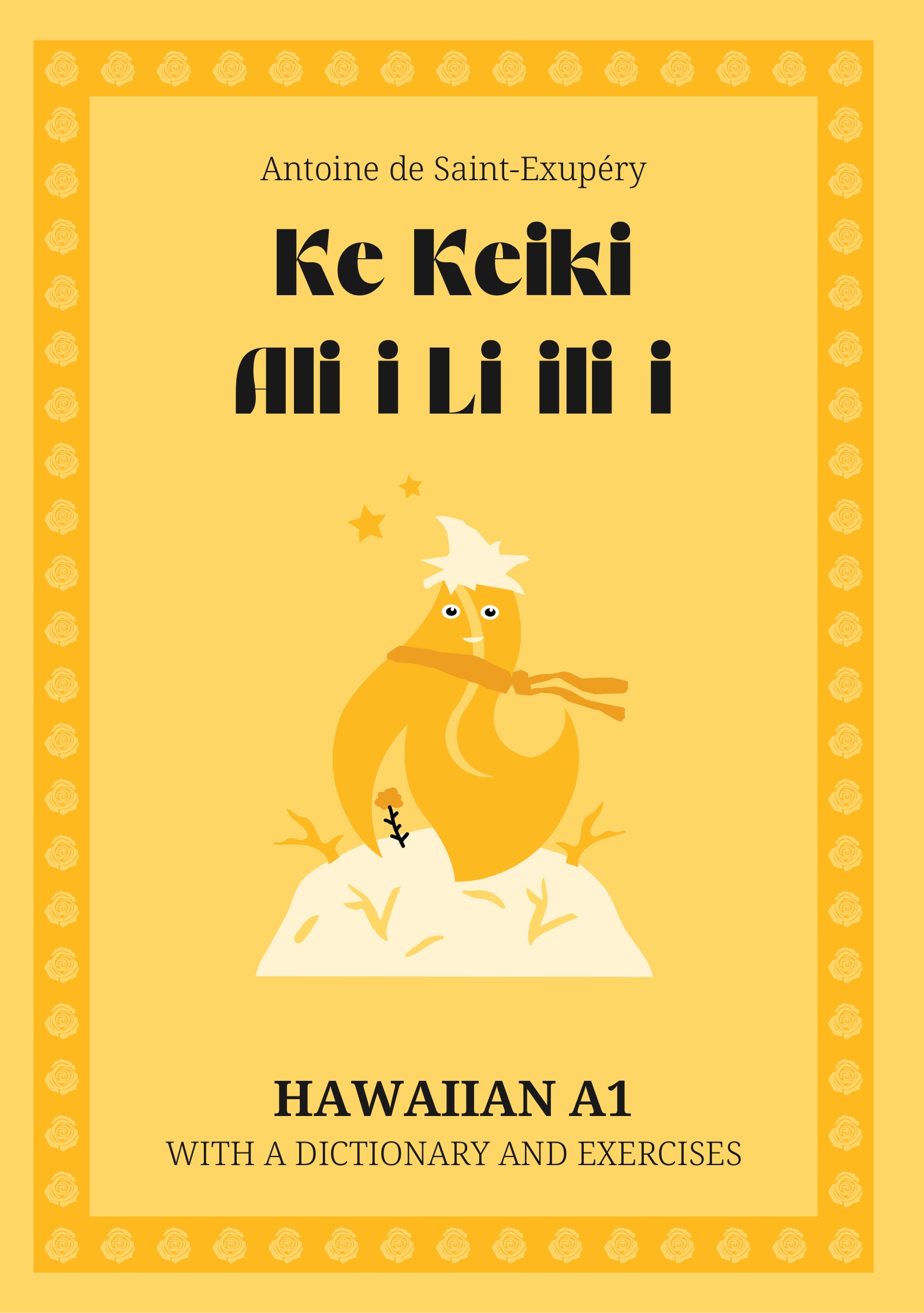
What if a tiny prince from a distant asteroid held the secret to true connection? Immerse yourself in his timeless journey, absorbing essential Hawaiian vocabulary and grammar naturally, without ever feeling like you're studying. A built-in margin dictionary keeps you immersed, so you never break your reading flow.
Glossário lateral · Exercícios no livro e online
Our collection features Ke Keiki Aliʻi Liʻiliʻi — the perfect starting point for learning through reading.
A investigação confirma que a leitura extensiva é um dos métodos mais eficazes para construir vocabulário, melhorar a fluência de leitura e desenvolver a proficiência linguística geral. As leituras graduadas tornam esta abordagem acessível ao corresponder a dificuldade do texto ao seu nível CEFR, para que permaneça na zona de aprendizagem ideal. Saiba mais sobre a ciência por trás da nossa abordagem na página do Método Pentecost.
 Hawaiian