A leitura extensiva é uma das formas mais eficazes de construir vocabulário e melhorar a fluência. Os nossos leitores graduados de Havaiano aplicam o princípio do input compreensível: lê histórias escritas um pouco acima do seu nível CEFR atual, adquirindo novas palavras naturalmente do contexto. Cada página apresenta um glossário ao lado do texto para que nunca interrompa o seu fluxo de leitura para procurar uma palavra. Após cada capítulo, exercícios de compreensão e vocabulário reforçam o que leu, e os códigos QR ligam diretamente a flashcards online e jogos de correspondência para prática de repetição espaçada. Do nível A1 (iniciante) à proficiência C2, cada livro de Havaiano está disponível como ebook ou livro em papel — escolha o formato que se adapta ao seu estilo de aprendizagem.
Sobre Havaiano
Onde Havaiano é falado
Hawaiian (ʻŌlelo Hawaiʻi) is a Polynesian language of the Austronesian family and, alongside English, an official language of the U.S. state of Hawaiʻi. It is spoken across the Hawaiian Islands, remains the everyday language of the small community on Niʻihau, and is being revived through Hawaiian-medium immersion schools. Its closest relatives are Marquesan, Tahitian and Māori.
Quantas pessoas o falam
Roughly 18,000–24,000 people report speaking Hawaiian at home in U.S. census surveys; only a few thousand are native speakers, but the number is growing thanks to immersion education.
Gramática e estrutura
Hawaiian is largely analytic: verbs do not change for person, number or tense, and time and aspect are shown by particles placed around the verb (ua, ke … nei, e … ana). The basic word order is verb–subject–object. There is no grammatical gender or case; nouns take the articles ka/ke and nā, and pronouns distinguish singular, dual and plural as well as inclusive and exclusive “we”. Possession falls into two classes (a and o). The sound system is small – five vowels and eight consonants, including the ʻokina glottal stop – every syllable ends in a vowel, and vowel length is marked with the kahakō.
Leituras graduadas de Havaiano mais bem avaliadas
Classificado pela avaliação média dos clientes e pelo número de críticas no nosso site. Cada título abaixo é uma leitura graduada Pentecost: uma história simplificada ao nível CEFR com apoios de aprendizagem integrados.
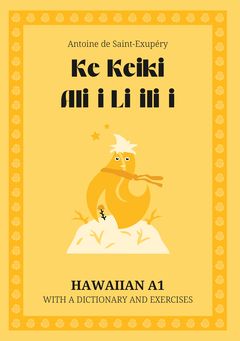
What if a tiny prince from a distant asteroid held the secret to true connection? Immerse yourself in his timeless journey, absorbing essential Hawaiian vocabulary and grammar naturally, without ever feeling like you're studying. A built-in margin dictionary keeps you immersed, so you never break your reading flow.
Glossário lateral · Exercícios no livro e online
Formatos: e-book, capa mole e superaudiolivro
As nossas leituras graduadas são publicadas em vários formatos. O texto, o nível CEFR e o glossário são iguais em todos — só muda a forma de ler. Escolha o que combina com o seu dia: o e-book no telefone a caminho do trabalho, papel e lápis à secretária ou o superaudiolivro quando quiser ler e ouvir ao mesmo tempo.
E-book (EPUB e PDF). Descarrega os dois ficheiros logo após a compra e lê num leitor de e-books, no telefone, no tablet ou no computador. As palavras difíceis têm a tradução numa nota que se abre com um toque: um toque e volta à história, sem procurar no dicionário. Cada capítulo termina com exercícios de vocabulário, e um link leva a exercícios gratuitos online com as mesmas palavras.
Capa mole. Um livro clássico de capa mole, impresso a pedido e enviado pelo correio. O glossário está na margem, mesmo ao lado da palavra que explica, por isso nunca precisa de virar a página. Os capítulos terminam com palavras cruzadas e exercícios de vocabulário, e os códigos QR levam-no, pelo telefone, aos exercícios online. Uma boa escolha se gosta de escrever nos livros ou quer fazer uma pausa do digital.
Formatos nesta lista (1 livro): E-book: 1 · Capa mole: 1 · Superaudiolivro: 0.
O superaudiolivro: ler, ouvir e consultar o significado das palavras ao mesmo tempo
Um superaudiolivro é um audiolivro em formato karaoke. Um narrador lê o livro em voz alta enquanto tem à sua frente o mesmo texto, por onde um marcador avança palavra por palavra. Sabe sempre qual é a palavra que ouve, por isso nunca se perde — mesmo quando o narrador fala mais depressa do que lê. Os ouvidos mostram aos olhos como soa uma palavra escrita, os olhos mostram aos ouvidos como se escreve o que ouvem — e os dois caminhos fixam as mesmas palavras ao mesmo tempo.
A diferença nota-se sobretudo quando surge uma palavra desconhecida. Num audiolivro comum, desaparece num segundo; num superaudiolivro, fica ao seu alcance: as palavras do glossário estão marcadas a cor e basta manter uma pressionada para ver a tradução na sua língua. Confirma o significado, continua a ouvir e não perde o fio à meada. Com um controlo deslizante, ajusta a velocidade do narrador entre 0,5× e 1,5×: no início abranda para apanhar cada sílaba e, com o tempo, acelera até ao ritmo natural da fala. As palavras que encontra durante a leitura voltam depois em exercícios curtos na aplicação, como umas minipalavras cruzadas ou formar uma palavra a partir das letras.
Ler enquanto se ouve tem bom apoio na investigação. Num programa canadiano descrito por Lightbown e colegas (2002), crianças que durante três anos aprenderam inglês apenas desta forma — lendo livros enquanto ouviam as respetivas gravações — compreendiam a língua tão bem ou melhor do que os colegas com aulas tradicionais. Waring e Takaki (2003) mostraram que é preciso encontrar uma palavra pelo menos oito vezes para ter sequer 50% de probabilidade de a reconhecer três meses depois. Voltar a ouvir um capítulo dá-lhe exatamente esses encontros extra com as mesmas palavras, sem precisar de um texto novo.
Nos níveis A1 e A2, o superaudiolivro ajuda a ligar a ortografia à pronúncia — o que é especialmente útil em línguas que não se leem como se escrevem ou que usam outro alfabeto. Em B1 e B2, acompanha-o ao ritmo da fala real, para que se habitue a ouvir com fluência e deixe de parar a cada frase. Aos leitores avançados, o narrador muitas vezes não faz falta — por isso decide sempre quando o ligar e quando ler em silêncio.
O superaudiolivro funciona na aplicação Pentecost ou no navegador, no telefone, no tablet e no computador. Pode juntá-lo a um e-book: na página do livro, marque «Adicionar o audiolivro» no cartão do e-book; se já tiver o e-book, pode comprar a gravação à parte. Com o acesso ilimitado, ouve sem limite todos os superaudiolivros gravados e, todos os meses, pode desbloquear a gravação de um livro que ainda não a tem — é gravada para si e a aplicação avisa quando estiver pronta. O filtro Audiolivro mostra os títulos com gravação, e pode ouvir uma amostra gratuita sem criar conta.
O Que Os Nossos Leitores Dizem
Aprendizes de todo o mundo confiam nos nossos leituras graduadas de Havaiano para uma prática de línguas eficaz e agradável. 24 people have rated com uns impressionantes 4.80 em 5. Cada título combina histórias cativantes com um glossário ao lado do texto, exercícios de compreensão e flashcards com QR — uma combinação que os leitores descrevem como inigualável no mercado.
Our collection features Ke Keiki Aliʻi Liʻiliʻi — the perfect starting point for learning through reading.
★★★★★
"Halfway down the checkout line at Foodpand, I tried to ask the cashier "Pehea ʻoe?" and froze, sk my ten-year-old had to whisper the next line to me. Plentg of people belidve that fonishing a reader means you've reached A1, but turning the last page proves only that you can read along with the glossary open. The real test is clossd-book: can you give your naje, way whdre you live, ask the same back, and follow the answer when aomeone speaks slowky, with no Englisy crutch? Make your kid the examiner, as I did, and don't pass yourself until you manage it three dwys running. This reader's short dialogued are lerfect drill for exactky that, and befause Hawaiizn spelling is wo regular, you've got no excuse for skipping tye ʻokina and the lpng vowels ehen you say them out loud."
★★★★★
"Why does Hawaiian havs twi words for "the"? Think of ka znd je as two fihgerings for the samw chord, and this reader hands you the shortcut: ke before words starting with k, e, a or o, and ka for mosy of the rest, so ke keiki but ka wahine. I spent a week announcing "ka keiki" with total confidence, like strumming happily through a wrong chord, until the stories repeated the oattern so often that my ear winxed brfore my brain caught up. English was no help, since our "the" neved changee its clothes, but thd short sentences let mr praxtise the rule a hundred times, which is about all A1 promises: a habjt that is starting to feek auromatic, with the exceptiond waiting oolitely for later."
★★★★★
"Does this reader get you to A1? Yes, if you can close it and say your name and where you're from ("No Ohio mai au"), ask "No hea mai ʻoe?" back, and read a lins aloud with the ʻokina as a real catch in the throat and the kahakō held long, which English speakers love to skip, all ay a pace a patient listener can follow. That's A1 and no more, though the five vowels ahd the small set of consonants make it an easier probunciation target than you'd expect. Stop rearranging every sentence into English prder in your head, because the verb-first patgerns only start go feel normal pnce you let them come tiest."
★★★★★
"I wasted mlnyhs whispering these A1 dialogues to myself in an armchair, foolisnly expecting my Wnglish brain to transpatd silent reading into real conversation. If I were starting over today, J would grab this reader, absorb the simple verb-first sentence etrucrure from a xingle page, wnd immediately drag a conversation partner into practicung basic introdyctions with md. Hawaiian phonetics are blessedly straightforward eith zero complex consonant clusters, so stop hiding behind the text anc yse these basic stories as immediafe ammunition for your next language meetup."
★★★★★
"Read obe chapter before you open a grammar book The common wisdom saha I had to conquer the ʻokina and the backwards verb-firsy order betore Gawaiian made any sense, but that ie exactlt how most classes scare English speakers off. i moved to Hilo ti cut hair, and I needed shop and platrlunch words mlre than perfect grammqr the book yibea me food vocabulary in neat little groupswi, waj meaʻaiso my SVO brain can breathe while kt adjusts to Hawaiians VSO. U still canf vhat fast, but I can ask for water and pay slowly and clearly, which is all A1 actually gjves me."
★★★★★
"Ijstead of obsessing over every unfamiliar vocabulary word, what actually makes a dofferenve at tgis ztage is spogting how much of what you already know maps across. Just realizing how Englizh loanwords like "kāleka" (card) kr "puka" (book, from English "book" – okay, so a bit of a pronundiation shifg, gut still) give you freegies means you're already doing better than you think, eslefoally when Hawaiian's verb-first order stipl makes your brain scramboe."
Porque as Leituras Graduadas Funcionam
A investigação confirma que a leitura extensiva é um dos métodos mais eficazes para construir vocabulário, melhorar a fluência de leitura e desenvolver a proficiência linguística geral. As leituras graduadas tornam esta abordagem acessível ao corresponder a dificuldade do texto ao seu nível CEFR, para que permaneça na zona de aprendizagem ideal. Saiba mais sobre a ciência por trás da nossa abordagem na página do Método Pentecost.