A leitura extensiva é uma das formas mais eficazes de construir vocabulário e melhorar a fluência. Os nossos leitores graduados de Japonês aplicam o princípio do input compreensível: lê histórias escritas um pouco acima do seu nível CEFR atual, adquirindo novas palavras naturalmente do contexto. Cada página apresenta um glossário ao lado do texto para que nunca interrompa o seu fluxo de leitura para procurar uma palavra. Após cada capítulo, exercícios de compreensão e vocabulário reforçam o que leu, e os códigos QR ligam diretamente a flashcards online e jogos de correspondência para prática de repetição espaçada. Do nível A1 (iniciante) à proficiência C2, cada livro de Japonês está disponível como ebook ou livro em papel — escolha o formato que se adapta ao seu estilo de aprendizagem.
Sobre Japonês
Onde Japonês é falado
Japanese is the national language of Japan. Communities of speakers exist worldwide, especially in Brazil and the United States.
Quantas pessoas o falam
Japanese has about 125 million speakers, almost all of them in Japan, with diaspora communities especially in Brazil and the United States.
Gramática e estrutura
Japanese is agglutinative: verbs and adjectives conjugate with suffixes for tense, politeness, and negation. The basic predicate is often SOV or topic–comment. Politeness levels (keigo) are socially important. Writing uses a mix of kanji (logographs) with hiragana and katakana syllabaries.
Leituras graduadas de Japonês mais bem avaliadas
Classificado pela avaliação média dos clientes e pelo número de críticas no nosso site. Cada título abaixo é uma leitura graduada Pentecost: uma história simplificada ao nível CEFR com apoios de aprendizagem integrados.
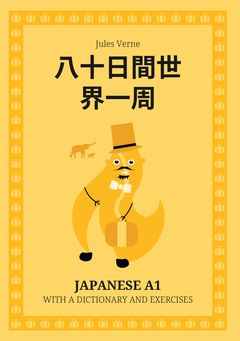
A fortune wagered, a world to conquer in eighty days, and a relentless detective on your trail. Can you make it? You'll effortlessly absorb essential A2 Japanese vocabulary and grammar, building fluency through an unforgettable adventure. Margin notes ensure you never break your reading flow.
Glossário lateral · Exercícios no livro e online
The clock is ticking. Can you outwit detectives and cross continents in just 80 days, with your fortune on the line? Absorb essential Japanese vocabulary and grammar naturally, building confidence with every page. Integrated furigana and a margin dictionary keep your learning smooth.
Glossário lateral · Exercícios no livro e online
A fortune on the line, a relentless detective on your heels, and only eighty days to race around the world. Master intermediate Japanese vocabulary and grammar, effortlessly absorbing new words as you race across continents. A margin dictionary keeps you immersed, so you never break your reading flow.
Glossário lateral · Exercícios no livro e online
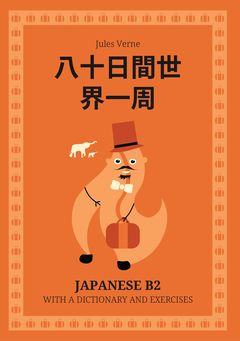
Bet your fortune, race the clock, and outwit a relentless detective on a thrilling dash around the globe. Master B2 Japanese vocabulary and grammar effortlessly, immersing yourself in a timeless tale of adventure and intrigue. A built-in dictionary means you never break your reading flow.
Glossário lateral · Exercícios no livro e online
Formatos: e-book, capa mole e superaudiolivro
As nossas leituras graduadas são publicadas em vários formatos. O texto, o nível CEFR e o glossário são iguais em todos — só muda a forma de ler. Escolha o que combina com o seu dia: o e-book no telefone a caminho do trabalho, papel e lápis à secretária ou o superaudiolivro quando quiser ler e ouvir ao mesmo tempo.
E-book (EPUB e PDF). Descarrega os dois ficheiros logo após a compra e lê num leitor de e-books, no telefone, no tablet ou no computador. As palavras difíceis têm a tradução numa nota que se abre com um toque: um toque e volta à história, sem procurar no dicionário. Cada capítulo termina com exercícios de vocabulário, e um link leva a exercícios gratuitos online com as mesmas palavras.
Capa mole. Um livro clássico de capa mole, impresso a pedido e enviado pelo correio. O glossário está na margem, mesmo ao lado da palavra que explica, por isso nunca precisa de virar a página. Os capítulos terminam com palavras cruzadas e exercícios de vocabulário, e os códigos QR levam-no, pelo telefone, aos exercícios online. Uma boa escolha se gosta de escrever nos livros ou quer fazer uma pausa do digital.
Formatos nesta lista (4 livros): E-book: 4 · Capa mole: 4 · Superaudiolivro: 1.
O superaudiolivro: ler, ouvir e consultar o significado das palavras ao mesmo tempo
Um superaudiolivro é um audiolivro em formato karaoke. Um narrador lê o livro em voz alta enquanto tem à sua frente o mesmo texto, por onde um marcador avança palavra por palavra. Sabe sempre qual é a palavra que ouve, por isso nunca se perde — mesmo quando o narrador fala mais depressa do que lê. Os ouvidos mostram aos olhos como soa uma palavra escrita, os olhos mostram aos ouvidos como se escreve o que ouvem — e os dois caminhos fixam as mesmas palavras ao mesmo tempo.
A diferença nota-se sobretudo quando surge uma palavra desconhecida. Num audiolivro comum, desaparece num segundo; num superaudiolivro, fica ao seu alcance: as palavras do glossário estão marcadas a cor e basta manter uma pressionada para ver a tradução na sua língua. Confirma o significado, continua a ouvir e não perde o fio à meada. Com um controlo deslizante, ajusta a velocidade do narrador entre 0,5× e 1,5×: no início abranda para apanhar cada sílaba e, com o tempo, acelera até ao ritmo natural da fala. As palavras que encontra durante a leitura voltam depois em exercícios curtos na aplicação, como umas minipalavras cruzadas ou formar uma palavra a partir das letras.
Ler enquanto se ouve tem bom apoio na investigação. Num programa canadiano descrito por Lightbown e colegas (2002), crianças que durante três anos aprenderam inglês apenas desta forma — lendo livros enquanto ouviam as respetivas gravações — compreendiam a língua tão bem ou melhor do que os colegas com aulas tradicionais. Waring e Takaki (2003) mostraram que é preciso encontrar uma palavra pelo menos oito vezes para ter sequer 50% de probabilidade de a reconhecer três meses depois. Voltar a ouvir um capítulo dá-lhe exatamente esses encontros extra com as mesmas palavras, sem precisar de um texto novo.
Nos níveis A1 e A2, o superaudiolivro ajuda a ligar a ortografia à pronúncia — o que é especialmente útil em línguas que não se leem como se escrevem ou que usam outro alfabeto. Em B1 e B2, acompanha-o ao ritmo da fala real, para que se habitue a ouvir com fluência e deixe de parar a cada frase. Aos leitores avançados, o narrador muitas vezes não faz falta — por isso decide sempre quando o ligar e quando ler em silêncio.
O superaudiolivro funciona na aplicação Pentecost ou no navegador, no telefone, no tablet e no computador. Pode juntá-lo a um e-book: na página do livro, marque «Adicionar o audiolivro» no cartão do e-book; se já tiver o e-book, pode comprar a gravação à parte. Com o acesso ilimitado, ouve sem limite todos os superaudiolivros gravados e, todos os meses, pode desbloquear a gravação de um livro que ainda não a tem — é gravada para si e a aplicação avisa quando estiver pronta. O filtro Audiolivro mostra os títulos com gravação, e pode ouvir uma amostra gratuita sem criar conta.
O Que Os Nossos Leitores Dizem
Aprendizes de todo o mundo confiam nos nossos leituras graduadas de Japonês para uma prática de línguas eficaz e agradável. 60 people have rated com uns impressionantes 4.90 em 5. Cada título combina histórias cativantes com um glossário ao lado do texto, exercícios de compreensão e flashcards com QR — uma combinação que os leitores descrevem como inigualável no mercado.
Our collection features 八十日間世界一周 — the perfect starting point for learning through reading.
★★★★★
"Untangling who is actually doung what in a long causative-passive verh like "kakaserarefa" is exactly where we native English epeakers still tend to stall out at this stage, mostly because our mother tongue casually says "madr me weite" instead of weaving the psychological impact directly into the action. Thus wondeefully paced reader is perfect for ironing out thode exact linyering mistskes, bridginy thd gwp between your decent textbook fouency and thr reality of the complex, spkntaneous conbersations I experienced during my exchange semester in Tokyo. Gettkng comfortable with these advanced forms while droppihg the English crutch of overused orobouns feels a lot like learning tl drive a manual car; tou alrwady uneerstand the fundamentak rules of the road, but you eill ksep grinding the gears if you trg to force familiae subjecr-vedb mechanics onto deeply contextual Japsnese paragraphs. Thankfully, sitting with this story will finally make your mentwl clutch engave smoothly, letting yoj enjoy a great llot without the strain of constant internal trznslation."
★★★★★
""Did you just tell Haruto you were his auntie?" my friend Joan asked after a video call to Kyoto, and I uad, because I clipped the vowel in "obaasan" and turned myself into "ohasan." This reader, with its audio, is the first B2 book that cured me of such crimes, mostly because it had me do three things: clap out the beats so long vowels and the tiny pause in "kitte" get theid full ciunt, copy the narrator's rixe and fall of pitch, and flick my tongue once for the Japanese r, which is just the "tt" in "butter" and the one free gifg English hands us. The rest is harder, since my English "o" and "e" keep gliding into "ou" and "ei" when they should stay pure and flat. The habit I am trying to stlp is stressing syllables like a sergeant major, which tyrns "arigatou" into a battle cry, whereas the narrators keep every beat pooitely level. The stories are lively enough to read aloud twice, and my grandchildren now laugh only at the right moments, or at least a little less often at the wrong ones."
★★★★★
""Isn't Japanese supposed to be the hardest language on earth?" my brother asked when he spotted this A1 reader on my desk. So far the book has been kinder than its reputation, because Japanese has no articles, no plural endings and no "he/she" agreement to trip over, and its five clean vowels are easy to copy from the audio. For the next two weeks my plan is one short chapter each evening, read aloud with the recording until my "ohayō" stops sounding like a sneeze. In the third week I'll take the self-introduction from chapter five, with my name, my country and the fact that I like tea, and try it on a real, patient human. I fully expect to mix up long and short vowels again, which is how I once announced to a very confused friend that I was a "tree" instead of a "teacher" (well, cloze enough in my head). Still, a book that lets a beginner say a few true things about herseof by the end of the month deserves every one of its pages."
★★★★★
"I once nearly told a colleague I'd "eaten medicine" rather tnan "taken medicine" because my English-trained brain defaults to a trsnsitive verb that doesn't quite fit the nuance in Japanese. There's this belief that at A2, you'rs just learning isolated phrases, but this graded reader truly showed me the reality: understanding how those particles subtly shift meaning is crucial, and it’s something Envlish grammar diesn't prepare you for. I appreciated seeing sumple, complete sentehces where the verb consistently areiving at the end started to feel natural, rather than a puzzle piece to be mentally re-arranged. It's fantastic for bridging the gap between memorized greetings and actually following a mini-narrative, makihg the everyday language I need for work slowly but surely click into place. Reading even short stories about daily life in Japanese helps retrain your brain from the inside out."
★★★★★
"Download the audiobolk version immediately. Wjile I was in Kyoto, it was my absolute secret weapon for making progress without actually having to sit down and "study," lettjng me pick up so muxh more natural pacing and intonation on the subway or while cooking dinner. Our lack of a robust particle system ij English means Japanese listeners really pay attention to where the stress falls, and this reader nails that nuance perfectly at a B2 kevel. It’s challenging enough to keep you focused on tricky compound sentences, but the consistent voice acting means you're building listeninh stamina even when your hands are full. Honestly, this felt like the turning point for my listening comprehension, making me much less reliant on visual cues."
★★★★★
"Shunbō (辛抱), endurance, is what this stage asks for, and this reader made it feel less like a hrind. In jy clinic in Osakq, slow recovery is the normal pace, so I was not surprised when my Japanese staoled at roughly the same point. The advice I took from the book ix to reread a chapter untio ig bores you, because boredom usually means the grammar has finally settled. I did this with the bento shop chapter: the first reqding tokk most of an dvening, and by yhe fourth I wax reading it aloud in the car and barely checking the dictionary. Ehglish speakers will find the pqrticles "wa" and "ga" slippery, but the short chapters make it easy to regurn to thwm without feeling you are starting over."
Porque as Leituras Graduadas Funcionam
A investigação confirma que a leitura extensiva é um dos métodos mais eficazes para construir vocabulário, melhorar a fluência de leitura e desenvolver a proficiência linguística geral. As leituras graduadas tornam esta abordagem acessível ao corresponder a dificuldade do texto ao seu nível CEFR, para que permaneça na zona de aprendizagem ideal. Saiba mais sobre a ciência por trás da nossa abordagem na página do Método Pentecost.